Position the seats first
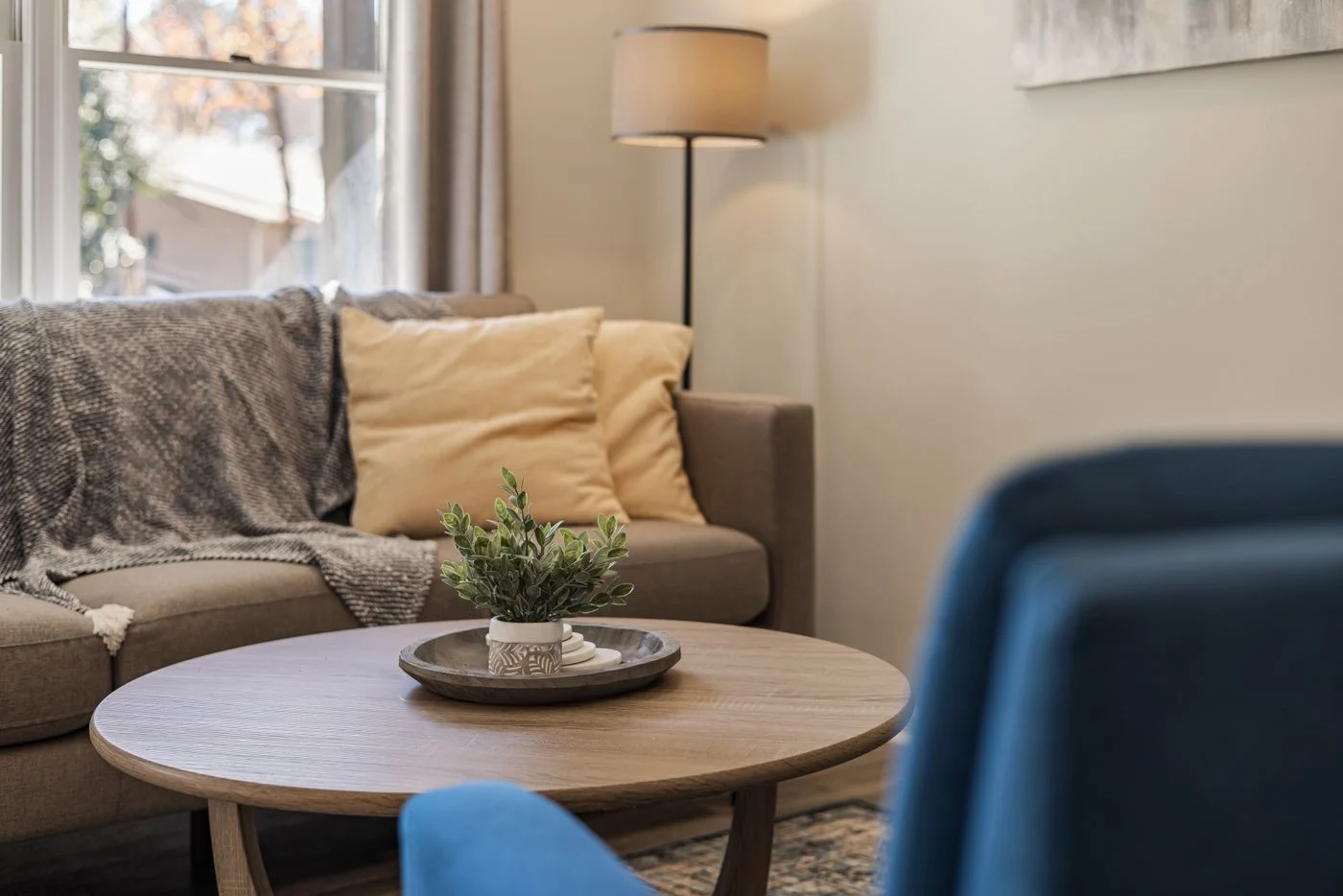
Establish the sofa, armchair and coffee-table positions before choosing a rug size. A rug will not reliably solve a seating group whose furniture is too far apart. Sit in every place and check whether the table can be reached. Give that working arrangement a shared floor area only after the furniture itself makes sense.
Mark possible rug edges with strips of paper. Compare an arrangement with the front furniture legs on the rug against a more generous area beneath the whole group. Neither is compulsory. What matters is a clear relationship between the pieces, without an individual item unintentionally balancing partly on a raised edge.
A seating group with an open side
A sofa standing freely in the room means the rug is seen from several directions. Mark its edges from the dining area or kitchen viewpoint too. An outline that looks right from the front may separate one armchair when seen from the side. Move the markers before settling on a standard size.
For a sofa with a long chaise section, include its actual shape. The rug does not necessarily need an equal projection beneath every corner. Check the open area in front of the seats used and the coffee table's relationship to them. Strictly centring on the complete sofa may move the table beyond convenient reach.
If no standard size matches the marked area, compare the next smaller and larger options deliberately. Record the compromise each requires. This avoids choosing solely from an attractive offer whose dimensions later force a different furniture layout. The functioning furniture remains the starting point.
Test the perimeter in use
Walk from the entrance to the seats and then towards the window. An edge placed at a tight change of direction is more noticeable during use than on a floor plan. Open a sofa bed or reclining footrest as well. Its additional movement area belongs in the plan even if it is needed only in the evening.
With a small rug, the coffee table may sit fully on it while every seat remains well outside. That can be a deliberate choice, but it creates a different effect from a connected seating area. Use the marked outline to decide which result you want. A larger rug is not automatically better if it occupies the passage to the door.
Add material and underlay to the decision
After choosing the size, consider thickness and construction. A deep, soft surface changes how small table feet sit and makes crumbs or tiny game pieces harder to find. A flat rug may be easier to manage in a busy family area where its material and care requirements suit the use. Follow the particular product's care instructions rather than judging by appearance alone.
A suitable non-slip underlay must be compatible with both rug and floor finish. It should not project beyond the edges. Check the perimeter again after laying the rug, and after vacuuming or moving the table. If furniture becomes difficult to move, the problem may be the combination of surfaces rather than the rug's dimensions. Assess the finished arrangement as a whole.