Two containers have different jobs
In this common arrangement, the inner pot holds the plant and growing medium and has drainage holes. The cachepot mainly provides the outer appearance and may catch residual water. Do not confuse those roles. A decorative layer of gravel does not turn a closed outer container into one with free drainage.
Choose a size that allows the inner pot to lift out without force. Leave enough room for the actual handling movement. A broad top rim may help if it remains stable and accessible. Test with the planted pot because leaves and stems can later obscure the place where fingers need to grip.
Water outside the cachepot
For manageable plants, remove the inner pot for watering and let it drain in a suitable place. Return it only after excess water has run off. The amount required depends on the plant and growing medium. Removal provides a way to inspect and drain; it is not a general reason to water more frequently.
If the plant is too large or heavy for that process, it needs another arrangement that can be controlled easily. Avoid repeatedly lifting a heavy container from an awkward position. Consider how collected water can be removed safely and whether a suitable saucer would better match the size. A heavy cachepot is not automatically easier to maintain.
Inspect the hidden space
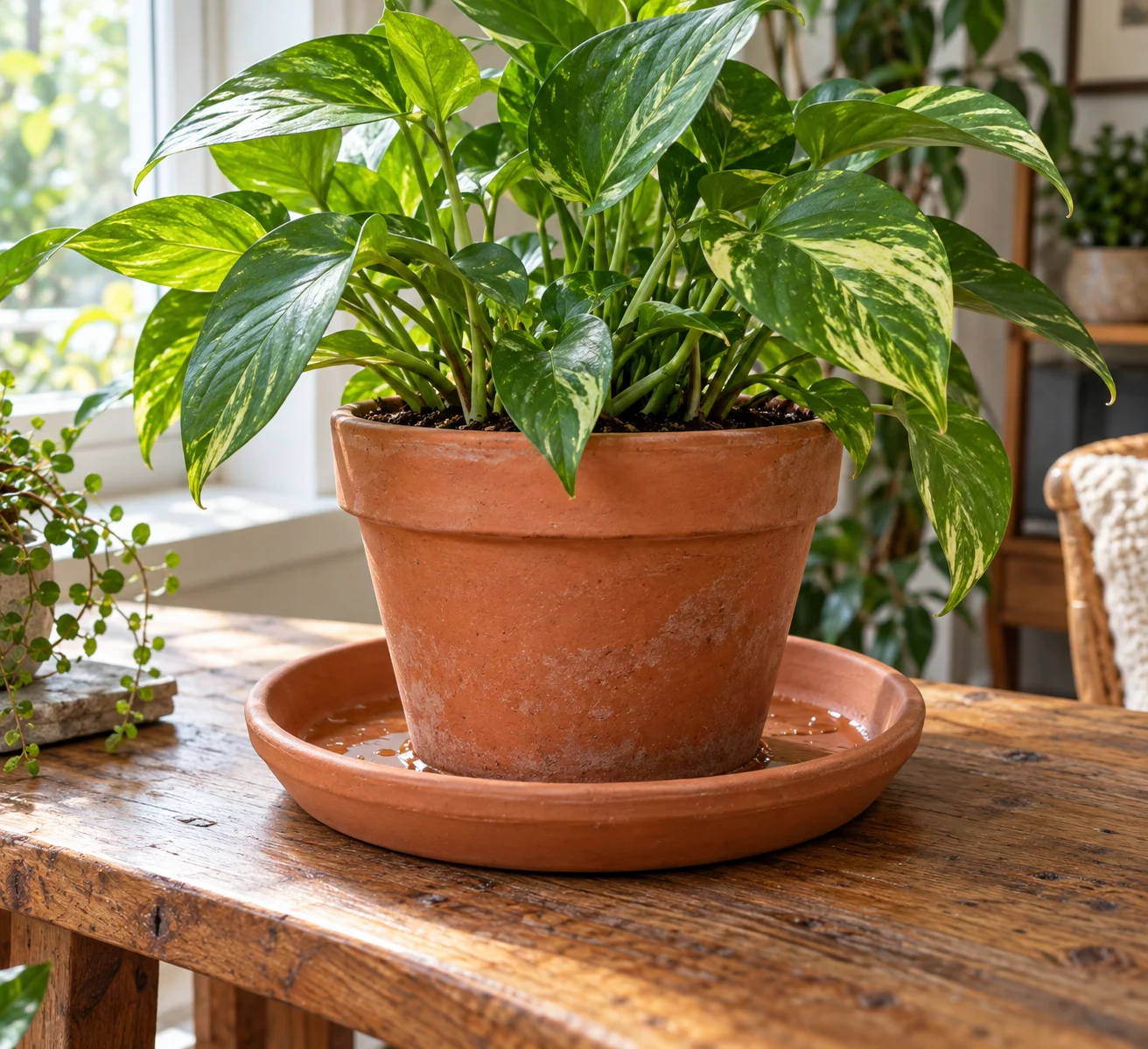
Check the bottom of the outer pot after watering. Water can collect there even when the compost surface already looks dry. Remove surplus standing water and clean the empty container when needed. Inspect for cracks or leaks before returning it to a sensitive surface.
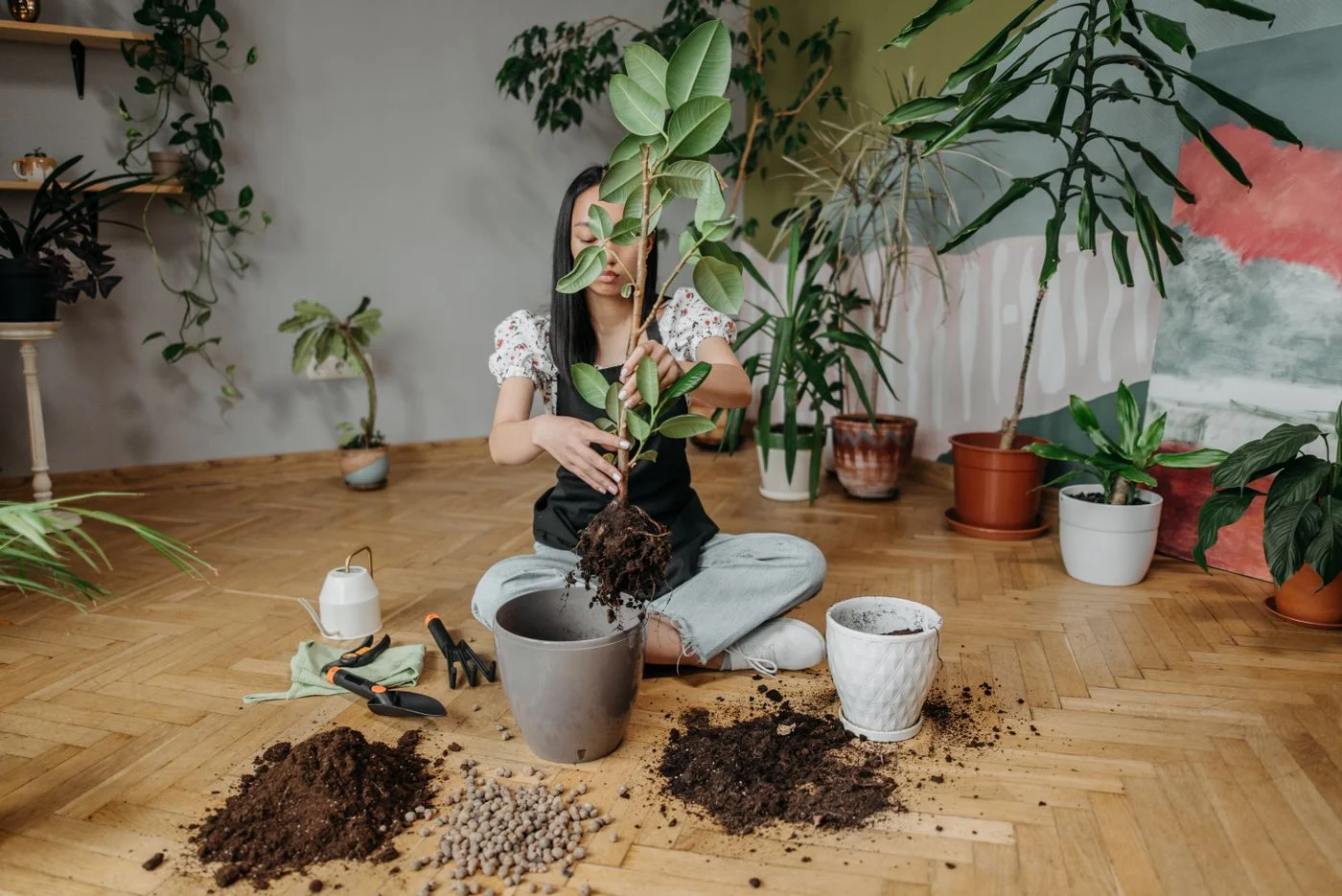
Repotting may change the previous fit. A larger inner pot must remain removable rather than wedging inside a narrow cachepot. Do not treat the decorative container as a permanent limit on plant growth. Select the appropriate growing pot first, then its outer cover. That keeps the appearance compatible with real care rather than making every watering an awkward compromise.