Put one activity on the tray
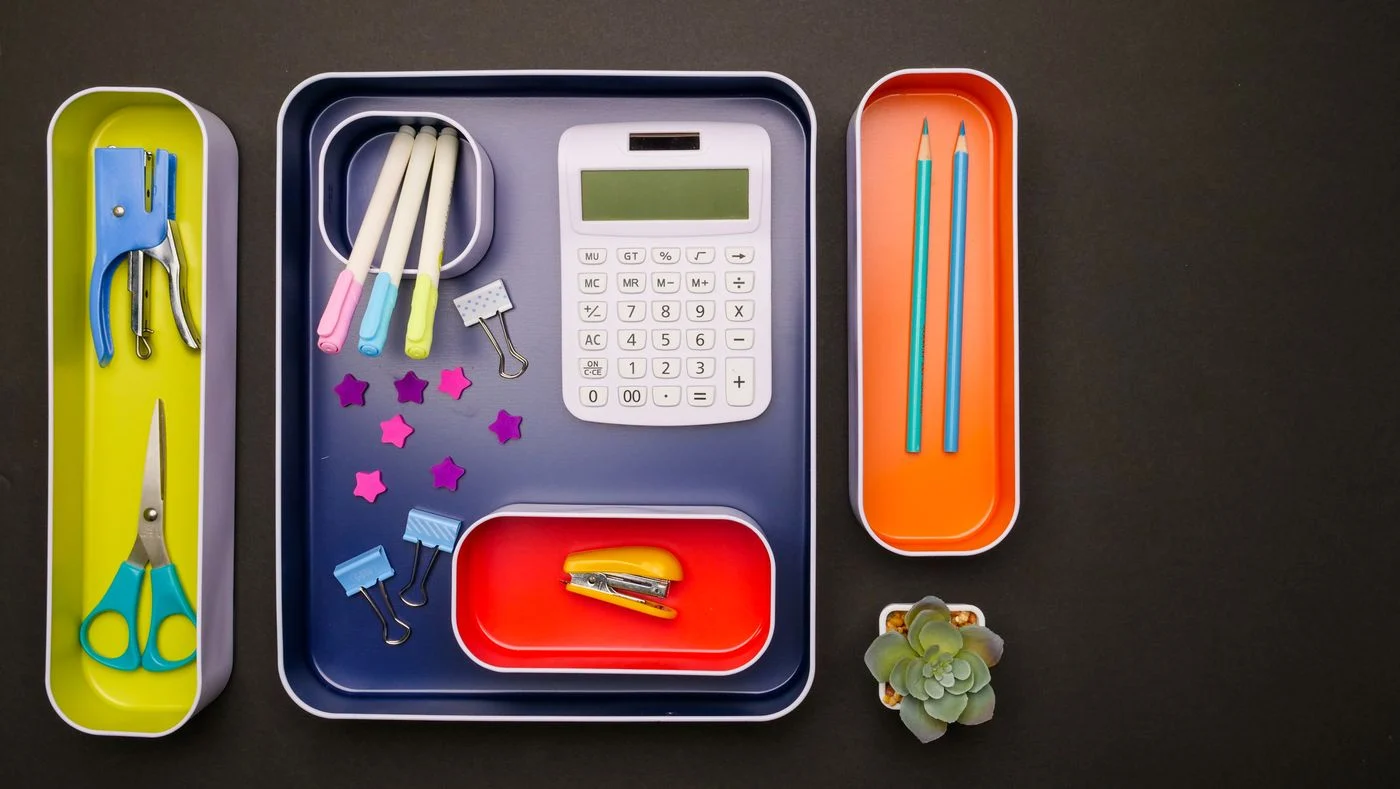
A tray is especially useful when one surface serves several activities in sequence. Collect the objects for a particular task, such as a notebook, pen and papers for weekly planning. A random remainder of cables, letters and cups does not become organised simply because it sits inside a tray.
Lay the objects on a clear surface first, then measure the space required. Allow room for fingers to grip the edge. A size that barely holds everything can be awkward to carry. Conversely, a very large tray encourages adding more weight and material until the supposed shortcut becomes difficult to handle.
Test carrying and parking
Lift the proposed collection with both hands. The base should not flex excessively, and small items should not slide uncontrollably. Any non-slip liner needs to suit the surface and must not interfere with equipment requirements. Sensitive electronics still need the support and ventilation specified by their manufacturers.
The destination matters as much as the tray. Test a shelf or sideboard with the loaded arrangement, not only the empty container. Include handles and projecting paper. A tray that needs turning or sliding diagonally into its space is generally unsuitable for loose work materials.
Make restarting straightforward
Arrange frequently needed objects so they are not buried beneath other pieces. A pen should be reachable without removing all the papers. One small container within the tray may be enough for loose accessories. Avoid several layers if they require restacking before every working session.
When the activity is finished, remove material no longer needed. The tray then remains ready for its next use rather than becoming an ever-growing holding area. If several projects run together, identify their storage clearly and limit the number to genuinely active work. A useful tray simplifies the change between activities; it does not replace deciding what still deserves to be kept. Its success is measured by the next easy setup, not by how much it can carry.