Choose a colour already in the room
Look at the sofa, rug and curtains together before choosing cushion covers. Find an existing colour you would enjoy seeing more of. It might be a small detail in a patterned rug rather than the largest coloured surface. A photograph helps you remember the room, but it cannot replace comparing materials because lighting and screens change colour appearance.
Take a small sample where possible. With a plain sofa, begin with one cover that repeats an existing tone and another that differs clearly. An almost-matching shade can look less settled than a deliberate contrast. Judge the combination on the sofa rather than relying on identical colour names printed on different product labels.
Use a pattern as the connection
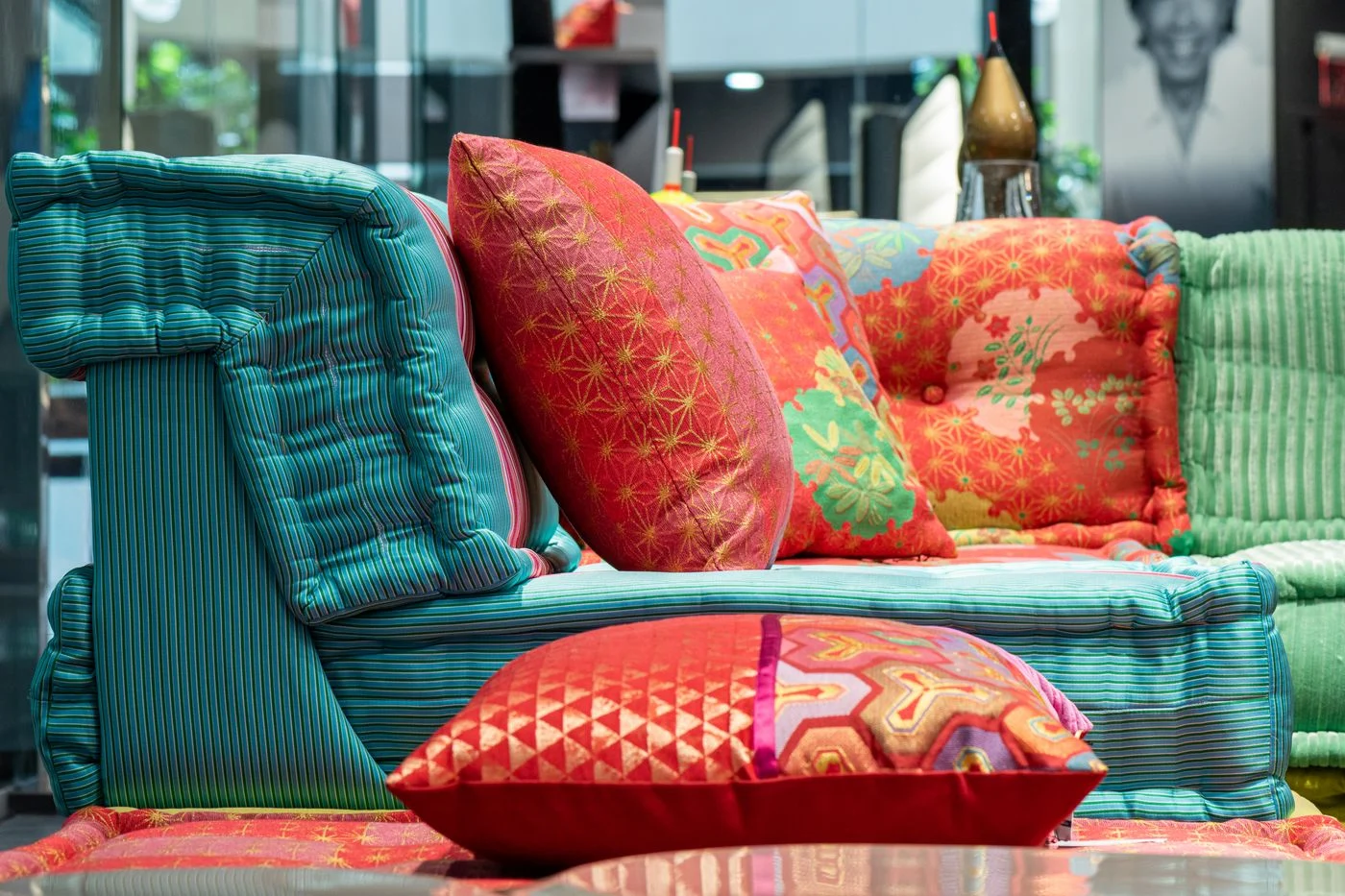
A patterned cover containing several existing colours can connect the sofa and rug. The remaining cushions need not be patterned too. Select one or two colours from that cover and test plain companions. Check that the colours remain recognisable at normal viewing distance; tiny details may disappear from farther away.
Change the order of the covers on the sofa. A dark cushion against a dark arm looks different from the same cushion against a pale backrest. This free adjustment may improve a combination that felt uncertain when the samples were merely laid together on a table.
Compare surfaces as well as colours
A smooth cover and a coarse weave behave differently even in similar shades. Put samples beside each other as they will be used. A glossy fabric becomes more noticeable under evening lighting, while a matt weave may remain quieter. If the room already contains a prominent pattern, every extra cushion does not need to compete for attention.
View the combination from the doorway and from the usual seating distance. Small patterns merge at a distance, while larger motifs remain visible. Turn patterned covers over too: some have a different or plain reverse. That can provide a second arrangement without adding another purchase or another item to store.
Limit the number to what is used
Cushions should be able to stay on the sofa when someone sits down. If a pile must go onto the floor before every use, there may be too many. Begin with the existing pads and check their dimensions. The cover needs to suit its filling; attractive fabric alone does not make an undersized or misshapen cushion comfortable.
Read the care instructions before buying, especially if frequent washing is expected. The zip and seams also need to suit that use. Store an unused cover folded rather than buying additional pads for every colour change. A small collection that is genuinely used is easier to combine than a cupboard full of alternatives that almost work together.