Separate the terms
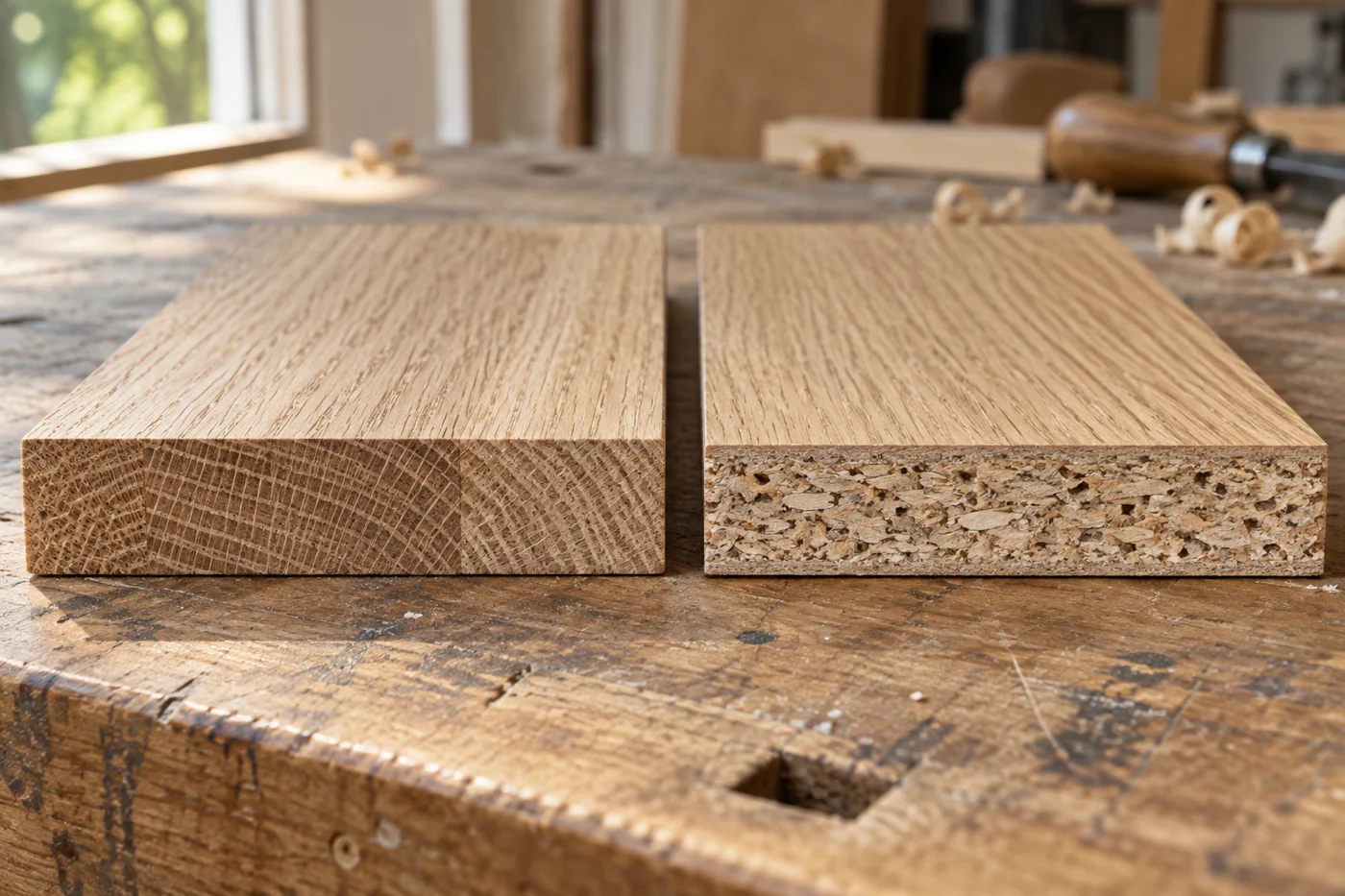
Solid timber describes components made from wood, which may include several joined pieces. Veneer is a thin layer of real wood over a supporting material. A wood-effect finish can instead reproduce the pattern on another material. Product pages do not always explain these details in the same place. Read the material descriptions for top, cabinet and legs separately.
A piece can combine several constructions. A solid edging strip does not prove that the entire top is solid. Equally, a veneered cabinet is not automatically inferior. Workmanship, joints, coating and intended use matter. Compare concrete properties rather than relying on a single word on the sales label.
Compare two desks: one is described as oak veneer over an engineered board, the other as a solid oak top, while both are lacquered. For routine cleaning, lacquer care may be similarly important; trimming the top or altering an edge raises a different question. Establish construction before considering that change. Weight alone is not a dependable way to distinguish them because thickness and supporting material also contribute. A heavy top is not automatically solid, and a light one is not automatically poorly made.
Inspect existing accessible areas
Look at an accessible edge, underside or existing opening without damaging the furniture. A layered construction may be visible there. An edging strip can hide it, however, and careful manufacturing can deliberately conceal transitions. Where construction remains uncertain, manufacturer documentation provides a better basis.
For second-hand furniture, ask for the model name and any invoices or instructions. Photograph details for an informed assessment. Scratching, drilling or peeling an inconspicuous area is not an appropriate identification method. A small self-inflicted defect may later become visible or allow moisture into the material.
Why it matters before alterations
A thin veneer offers different possibilities for treatment from a solid component. This does not mean that solid timber can automatically be sanded: finish and construction still need consideration. Seek an appropriate assessment before altering older or valuable furniture. Photographs alone often cannot establish whether material removal is suitable.
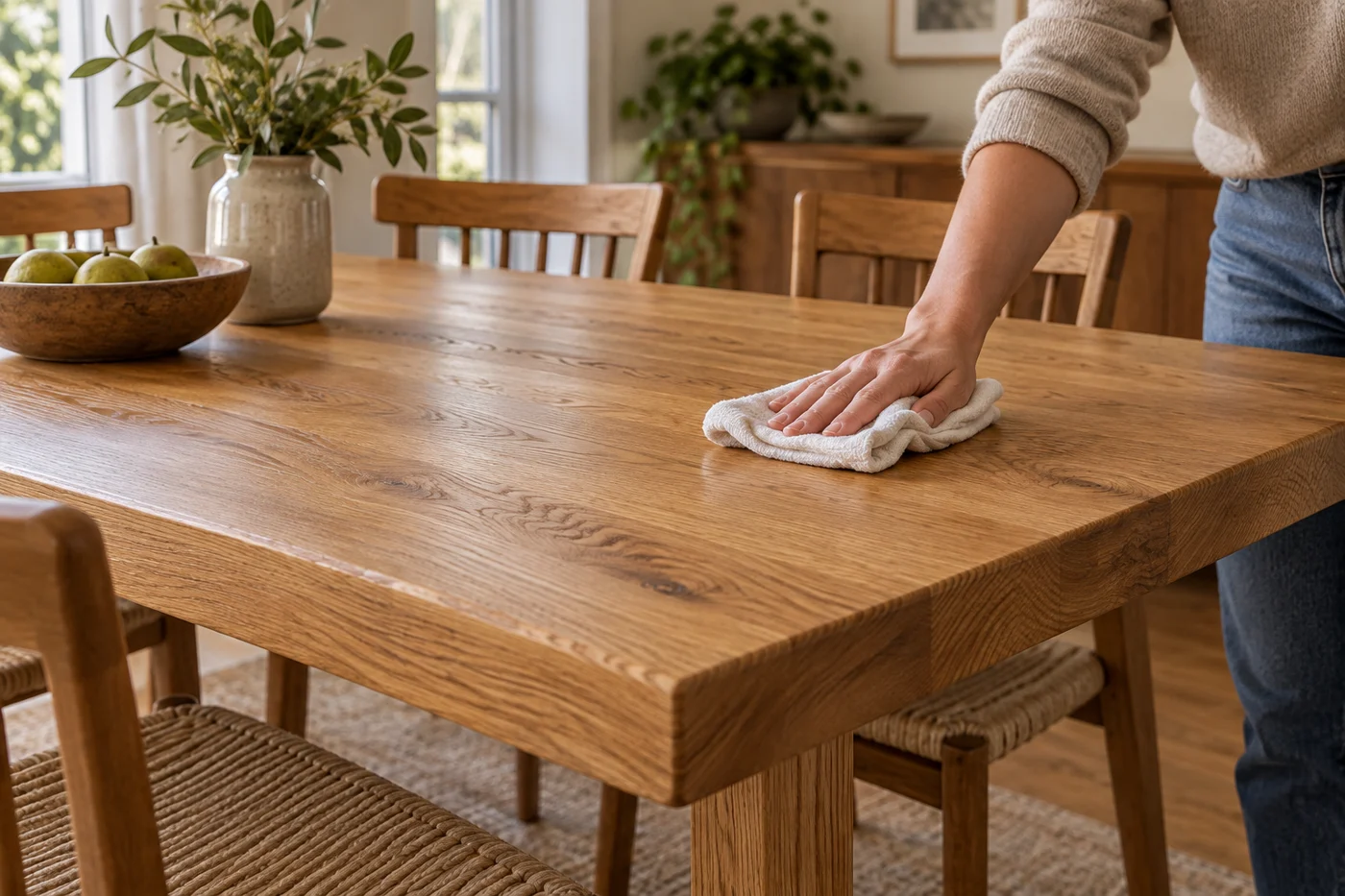
For cleaning, the existing finish is particularly important. Oiled wood needs different treatment from a lacquered surface, whether the underlying construction is veneer or solid timber. Keep both pieces of information: construction and finish. You can then find matching care guidance later instead of repeatedly guessing from the visible colour. When comparing two purchases, record these details beside dimensions and intended use so that appearance does not obscure a practical difference relevant to your home.