Do not move straight from rack to box
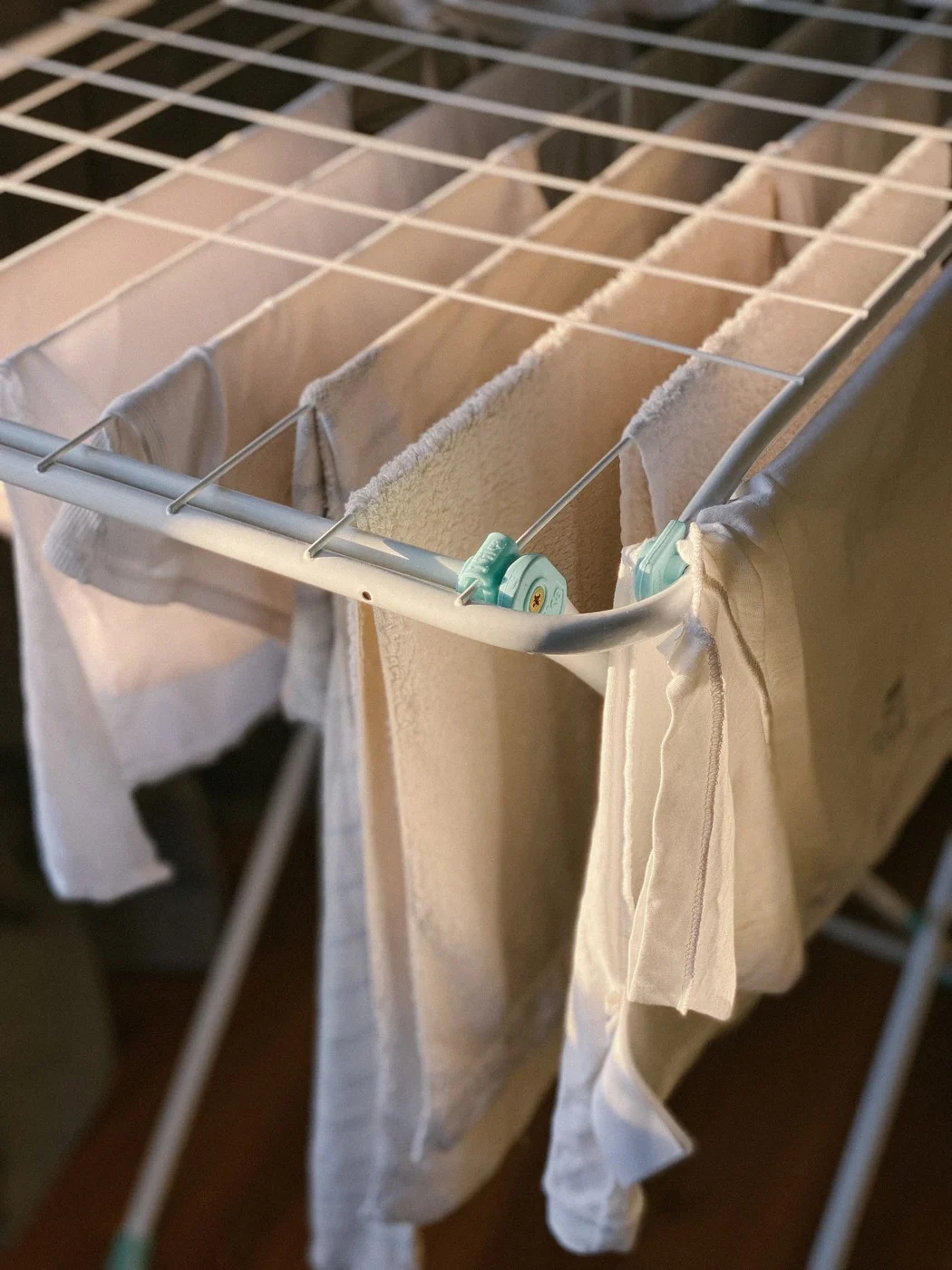
Allow time for a final check before folding. Feel hems, pockets, cushion edges and other thick areas. Let the textile dry completely according to its care instructions. Permitted drying methods vary; a warm spot on a radiator is not a universal solution for damp sections.
If an item has just completed an approved drying process, do not judge it solely by its current warmth. Check concealed areas after an appropriate pause too. A tightly folded item exposes less surface than one spread loosely. Avoid planning storage so tightly that damp things are packed because time has run out.
Inspect the container as well
A clean blanket is not stored dry if its box was recently wiped and remains wet. Inspect the base, lid and corners. Used containers can retain residue or odours. Clean and dry them appropriately for their materials before adding textiles. Packaging designed only for transport is not automatically suitable for long-term storage.
Choose a location suited to both material and environment. A room with changing humidity presents different conditions from a dry wardrobe. Do not compress textiles indiscriminately merely to close a lid. Delicate fillings and shapes can suffer. Follow the storage guidance for bedding and upholstered pads in particular.
When summer blankets and table linen share a box, the heavy blanket can hide smaller pieces. A suitable loose divider or separate containers can improve access where compatible with storage guidance. Pack by the next likely use rather than colour alone. Table linen for an approaching visit belongs near the top; a blanket not needed for months can occupy a less frequently opened position. This reduces repeated unpacking and makes visual inspection easier.
Keep things accessible
Label contents so the correct item can be retrieved directly. Do not bury frequently used pieces beneath a heavy stack. An accessible box is also easier to inspect. Open it occasionally and notice unusual smells or visible changes, especially after moving it to a different location.
If something seems damp or altered, do not simply return it to the same packaging. Identify the cause and deal with both textile and container appropriately. A scented sachet may disguise an odour but does not solve moisture. Preparation before storage matters more than a decorative addition inside the box. Keep the care label with the item, or photograph it, so its next cleaning does not depend on remembering how it was handled last season.