Start with what happens on the rug
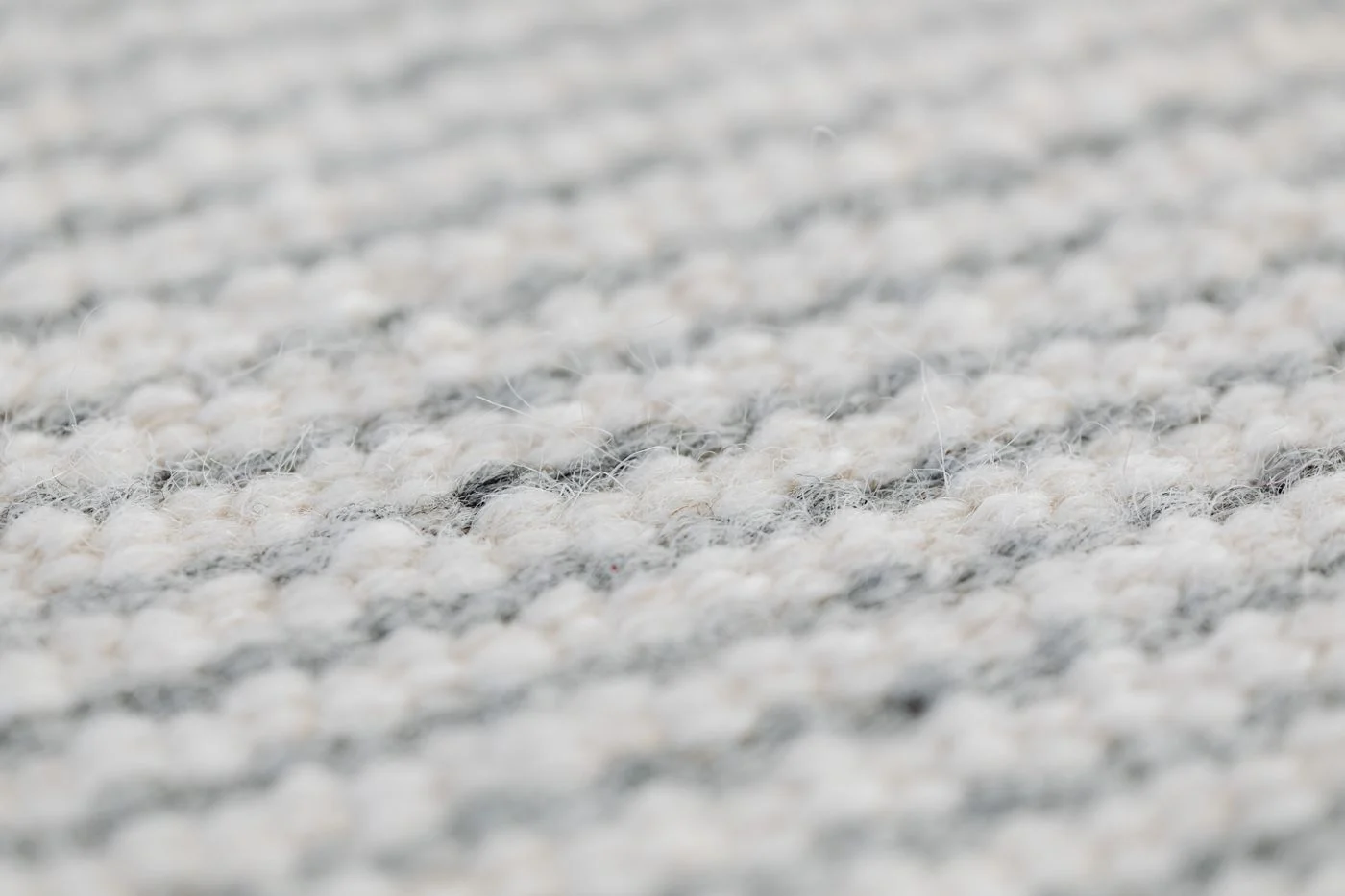
A flatwoven rug and a deep-pile rug can share a colour while behaving very differently in daily use. Consider what happens on that area: eating, playing, moving a chair or sitting barefoot? The answer is more useful than assuming that a softer rug always makes the better choice.
At a small dining table, chair legs must move across the surface repeatedly. That matters less in a quiet reading corner. Where small building blocks or puzzle pieces are used, they need to remain findable. Deep pile can conceal them, while a flatter surface stays easier to inspect. Neither observation establishes the quality of a particular product; it identifies a suitable use.
Inspect fringes and edges
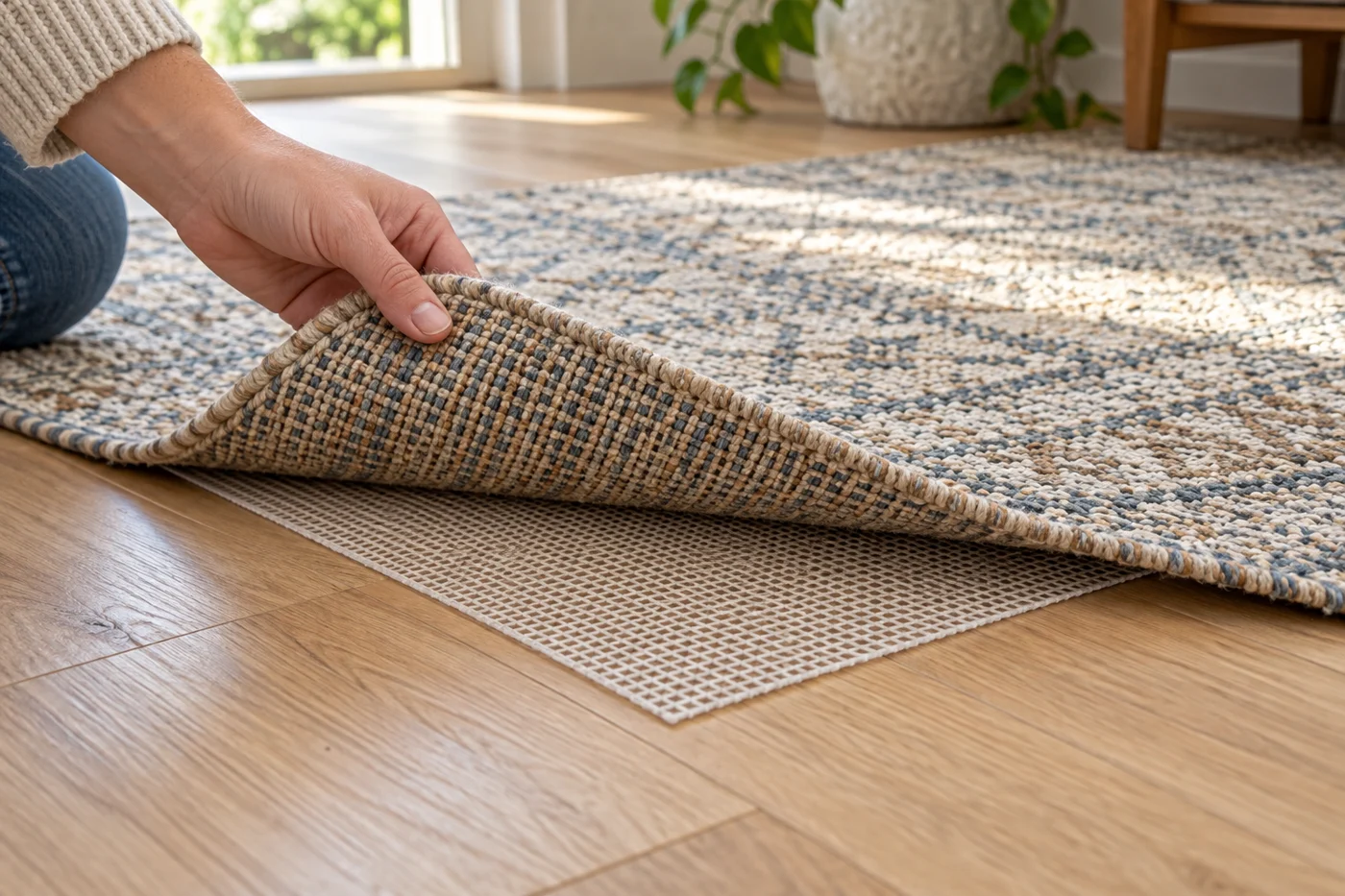
Construction includes the edge. Long fringes can interfere at a busy transition even where the rest of the rug is flat. A thick binding may behave differently beneath a light chair from the centre. Inspect the complete product rather than only an unfinished sample.
If a cleaning machine is used, compare its instructions with these edge details as well. Difficulties may come from loose ends or a raised border rather than the pile itself. An edge repeatedly pushed upwards is a reason to reconsider the combination. Flattening it after every clean is not a convincing permanent solution.
Test with a relevant object
If a sample is available, do more than run your hand across it. Place a comparable chair foot or small tray on the surface and judge stability. Include the intended underlay because it changes the complete construction too. A sample on a hard shop counter may behave differently from the same rug and underlay on your own floor.
Check door movements and low furniture. Overall thickness can become critical where a door swings across the edge. The rug should not need to be compressed simply for the door to close. A vacuum cleaner or cleaning robot also needs to cope with the actual construction. General claims about the machine are less useful than checking its instructions against the rug.
Be realistic about cleaning
Read the vacuuming and cleaning instructions before buying. Not every brush setting is suitable for every pile. A flatweave can also have open areas or fringes that need care, so flat does not mean maintenance-free. Compare the specific products rather than treating the two construction types as complete descriptions of their upkeep.
Think about drying space after permitted cleaning and the weight involved in lifting the rug. A large piece cannot be handled like a small mat. If softness is wanted only beside the bed, a smaller, well-positioned rug may make more sense than deep pile beneath all the furniture. Identify the part of the room that actually benefits from that surface.