Identify before bundling
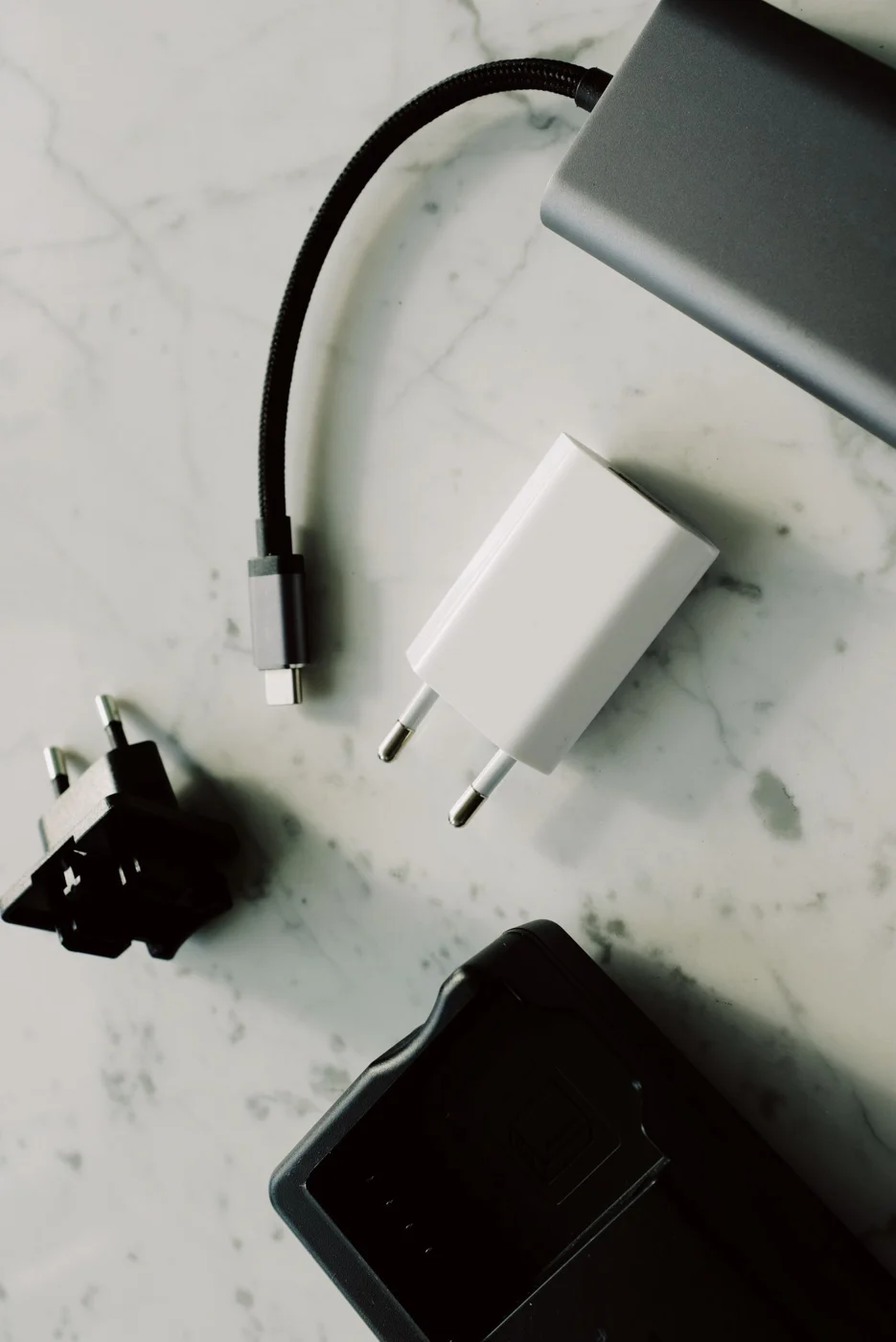
Lay cables out individually and match them to known devices. Give uncertain pieces a temporary label rather than immediately treating them as universal spares. Check manufacturer information about power, data capability and compatibility. A plug that physically fits does not answer every technical question.
Preserve important model and rating information. A charger with unclear or worn markings should not be assigned to a device merely by appearance. Remove damaged cables from ordinary use for appropriate assessment or replacement. Storage is not a repair.
Separate active equipment from reserves
Cables used daily at a workstation need a different arrangement from spares in a drawer. Keep active connections accessible and avoid routing that pulls on plugs. Follow device instructions concerning ventilation and charger operation.
Spare cables can be loosely coiled and held with suitable releasable ties. Avoid tight bends at connectors or compression. A small group by function is easier to search than one tangled collection of every cable in the household.
Use understandable containers
A shallow insert makes connector types visible. Small bags can hold matching accessories but need clear labels. Identify the device or task rather than colour alone. When the device is sold or discarded, its accessories can then be reviewed deliberately.
Do not put operating chargers into arbitrary closed storage boxes. A container for unused cables is not automatically suitable for running electrical equipment. Use only arrangements intended for the particular application and follow their instructions.
Review the collection
Do not keep unknown cables indefinitely just because they are small. After a device change, compare what remains. Working compatible spares may be useful, while numerous unidentified duplicates make retrieval harder.
Use appropriate local collection routes for unwanted electrical items. Check the association once more before removing a piece. A manageable collection of clearly identified cables is more helpful than a completely full compartment of possible connections.
Review accessories when devices change
When replacing a device, put its clearly identified accessories beside it. Check which components the manufacturer permits with the new device and which should remain with the old one. Connector fit alone is still insufficient. Label any useful spare immediately so that its purpose remains known. A limited review area can hold uncertain pieces, but should not grow indefinitely. Clear associations are more effective at preventing unnecessary purchases than a large collection of unidentified adapters. They also make it easier to pass on a complete device with the appropriate accessories.