Empty the drawer completely
Remove everything and clean the drawer according to its material guidance. Group cutlery, cooking tools, small accessories and objects that belong elsewhere. Judge duplicates by whether they are genuinely used together. A second pair of scissors may be useful; unidentified spare parts first need to be matched to something.
Measure usable internal width, depth and height. Include shaped sides and the underside of the drawer above. An insert can fit across the base while tall handles prevent closure. Adjustable dividers should suit the drawer and avoid damaging its surface.
Follow the work
Cooking spoons and turners are useful near cooking activity; table cutlery belongs where it is collected or put away. These areas may overlap in a small kitchen. Divide the drawer into a few recognisable groups rather than creating an elaborate individual compartment for every tool.
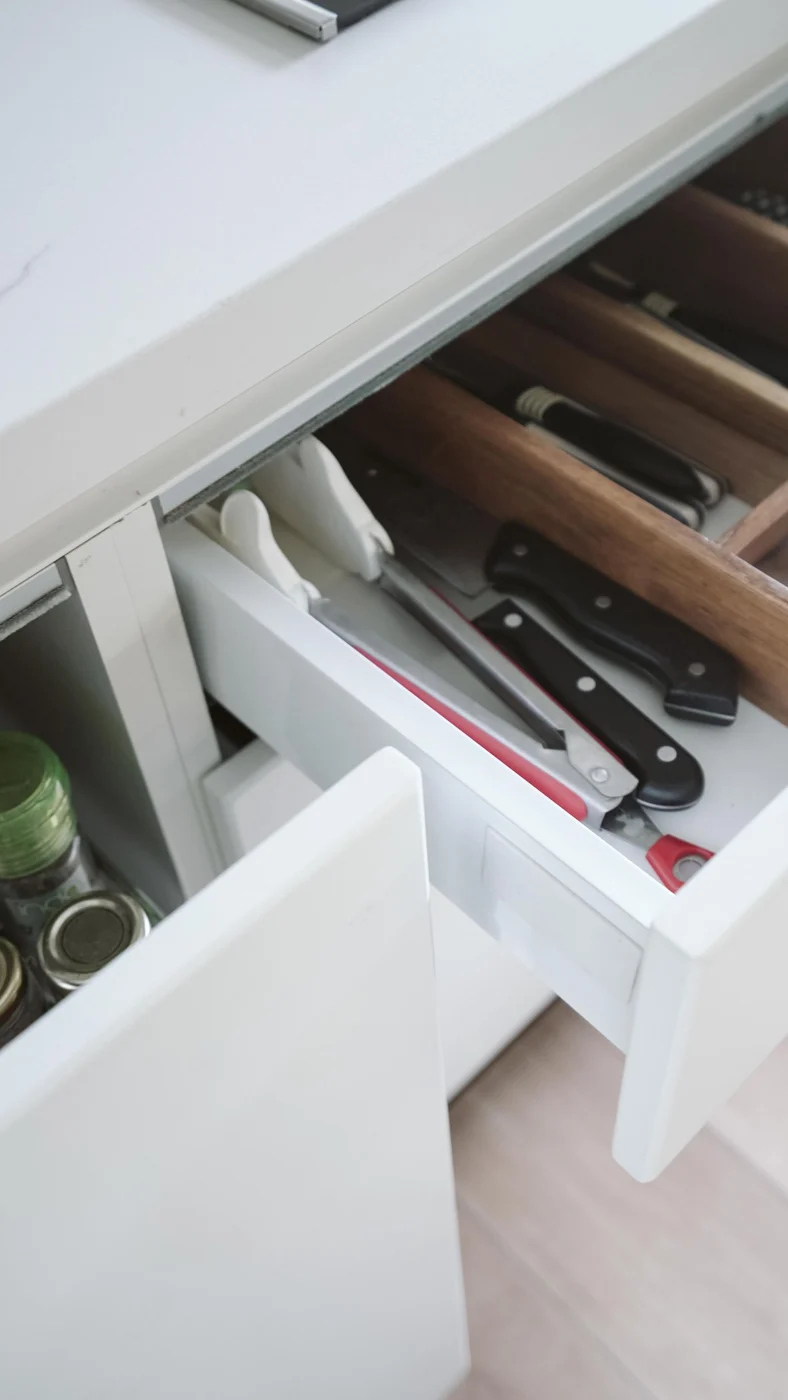
Long implements should lift out without being buried beneath several others. Try returning a frequently used object when everything else is already arranged. If two pieces must move first, the layout is not yet convenient. Sharp tools need suitable storage for their design and use.
Let inserts support the arrangement
A ready-made cutlery tray is convenient when its compartments fit the existing pieces. Smaller removable containers are more adaptable but may slide around. Test the arrangement by opening and closing the drawer slowly. Any non-slip material should be appropriate for the furniture and should not complicate cleaning.
Leave limited room for changes without turning it into an undefined catch-all. A new implement should receive a recognisable place. Occasionally used baking accessories need not occupy the most accessible drawer.
After several cooking sessions, review the result. Items repeatedly returned to the wrong place may indicate an unclear category or inconvenient location. Adjust that point instead of expecting an ideal arrangement understood only by the person who created it.
An insert need not fill every gap
Deliberately leave room beside a cutlery tray for a long implement that fits no standard compartment. A base filled to the millimetre may be less useful than a few inserts combined with open space. Check access to a second insert behind the first as well. If it can be reached only after removing the front group, reserve it for occasional pieces. This modest distinction can improve existing drawers without buying an entirely new organising system. Judge the result while returning clean utensils, since that is when an overly precise arrangement usually reveals its limitations.