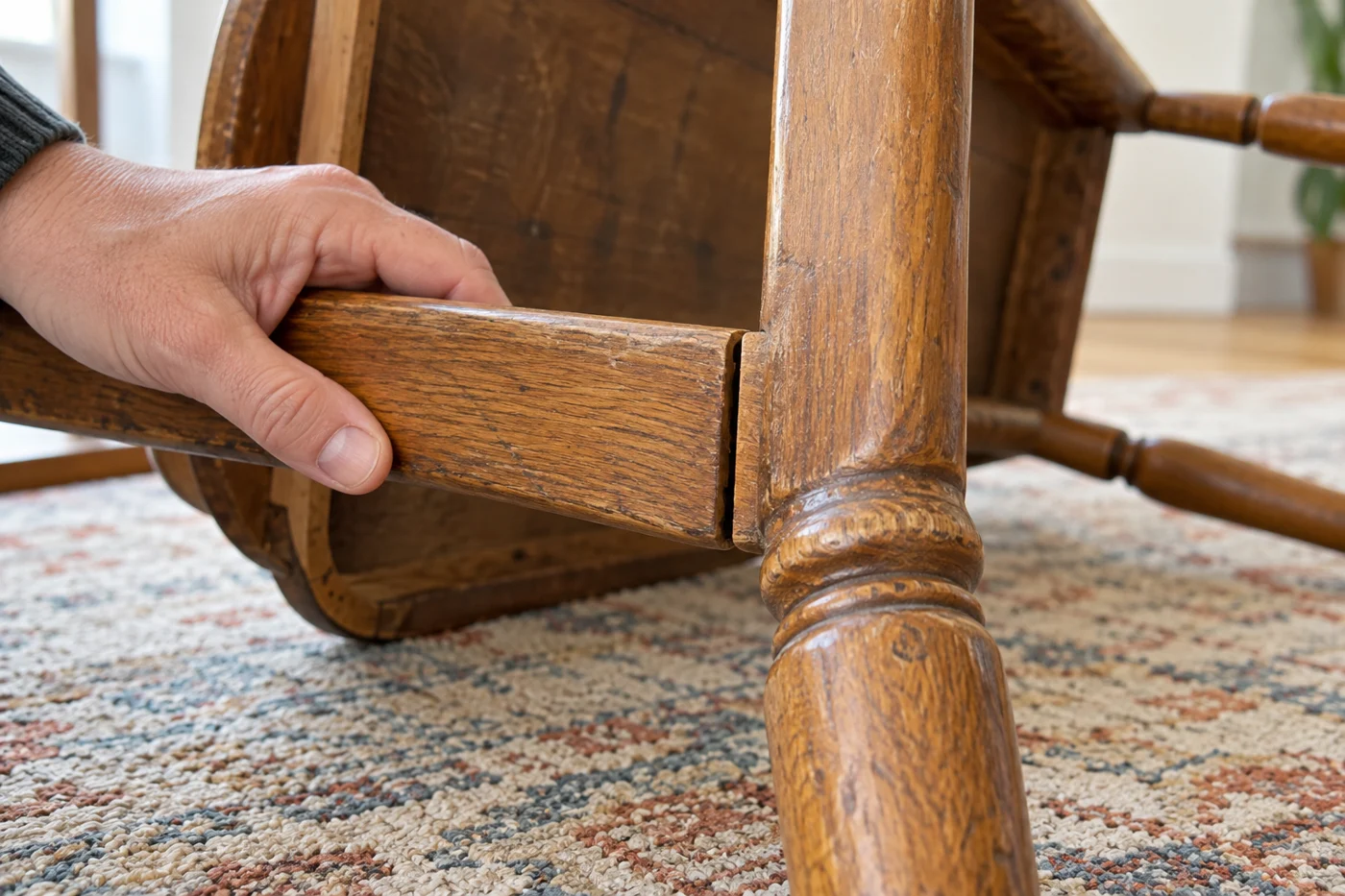
Stop loading it
If a chair suddenly feels unstable, remove it from normal use. Do not test how much it still holds by sitting down forcefully. Place it unloaded on a suitable level surface and inspect for visible changes. Another person can help with safe handling, particularly with heavy or unusually shaped models.
Compare feet, glides and leg positions. A missing glide can change how the chair stands without a loose leg. Conversely, a thick felt pad does not repair a weak connection. Note whether rocking occurs at one floor position or independently of location. That observation narrows the issue but does not assess the soundness of damaged construction.
A useful comparison is a chair that rocks only at one dining position. Carefully moving it unloaded to a suitable level surface can show whether the floor contributes. Visible movement of a leg relative to the frame is a different observation. Record the two separately. A workshop can begin more precisely with “rear left leg moves at the joint” than “it does not seem straight”. That specificity also helps distinguish several similar chairs.
Inspect rather than force connections
Look for cracks, open joints, projecting fixings and distorted components. Do not move anything forcefully. Simply tightening an arbitrary screw is not a suitable repair for a glued joint. Screwed constructions also differ in their requirements. The assembly instructions and exact model provide useful starting points.
If the instructions permit inspection or tightening of particular fixings, use the correct tool and follow the guidance. Excessive force can damage threads or material. A screw turning without holding is not fixed by further turning. Avoid random longer screws that could emerge elsewhere or change the construction.
Arrange a suitable repair
Photograph the affected area and the complete chair. Note when the change appeared and whether it followed a fall or move. The manufacturer, retailer or an appropriate workshop can advise more precisely with these details. Older or unidentified models particularly benefit from assessment when supporting connections are involved.
Return the chair to use only once the cause is understood and any necessary repair has been completed correctly. A temporary shim against rocking does not make a damaged chair sound. Keep repair and replacement details. With several matching chairs, visually inspect the others without automatically assuming the same cause or repair need. Clearly separate the affected chair during the process so another household member does not use it before the problem is resolved.