One leaf or a recurring pattern
Look at the entire plant before cutting. An old lower leaf is different from several new leaves with matching damage. Note recent moves, watering and unusual changes. This preserves your observations after the visible evidence has been removed. A photograph can help if you need advice later.
Not every yellowing leaf is completely dead. Do not strip large parts from an unfamiliar plant simply because it looks untidy. Consult guidance for the species. Softening stems, spreading marks or visible pests require a more focused assessment than trimming leaf edges for appearance.
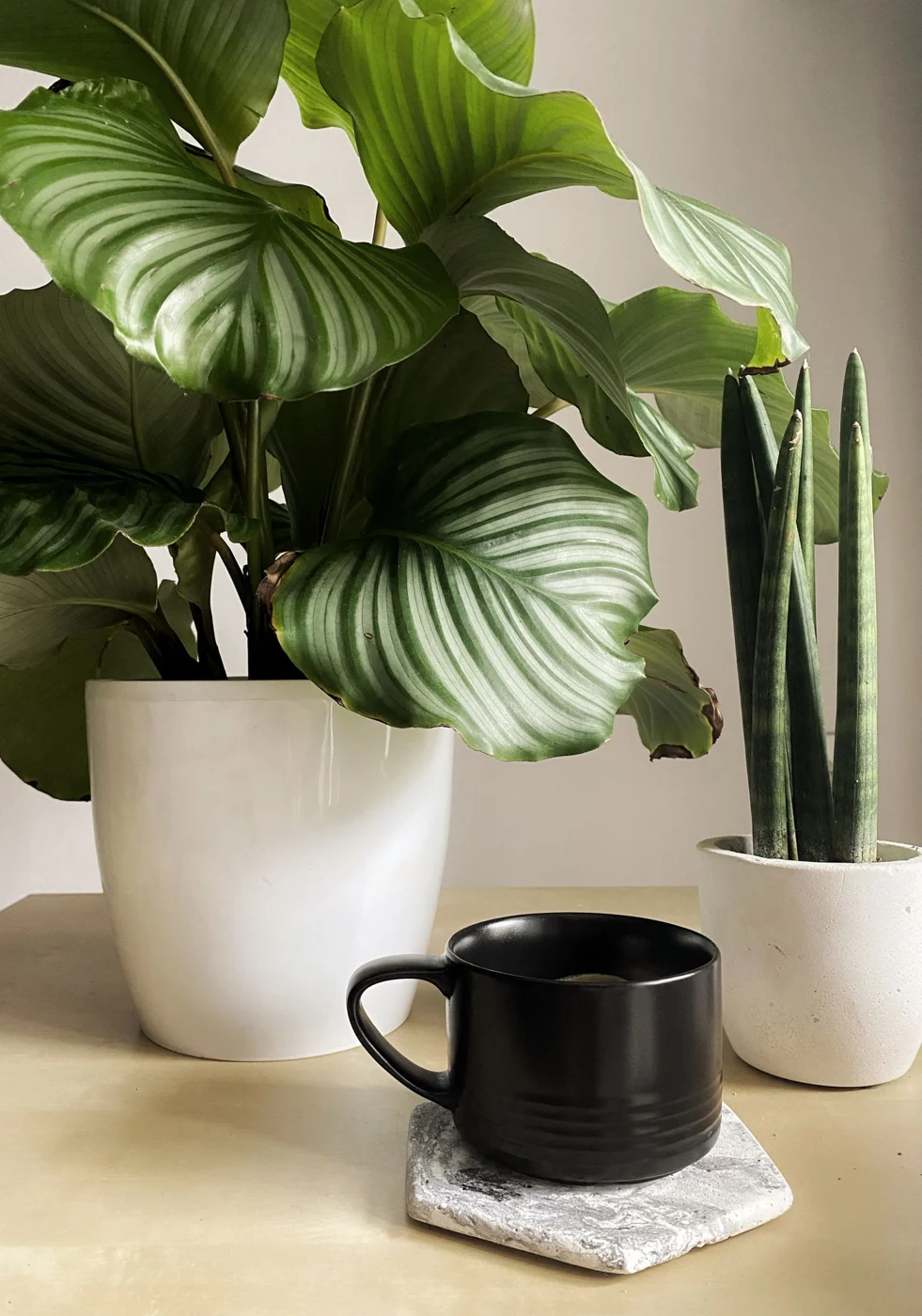
A dated photograph or simple sketch is enough for observation. Note whether affected leaves are low down, facing the window or scattered across new shoots. Changes confined to the glass-facing side provide useful spatial information for further investigation, although they do not establish a cause. Recording the pattern prevents all damage from being remembered as identical once leaves are removed. At the next check, compare similar leaf positions and note whether genuinely new areas have appeared.
Work cleanly
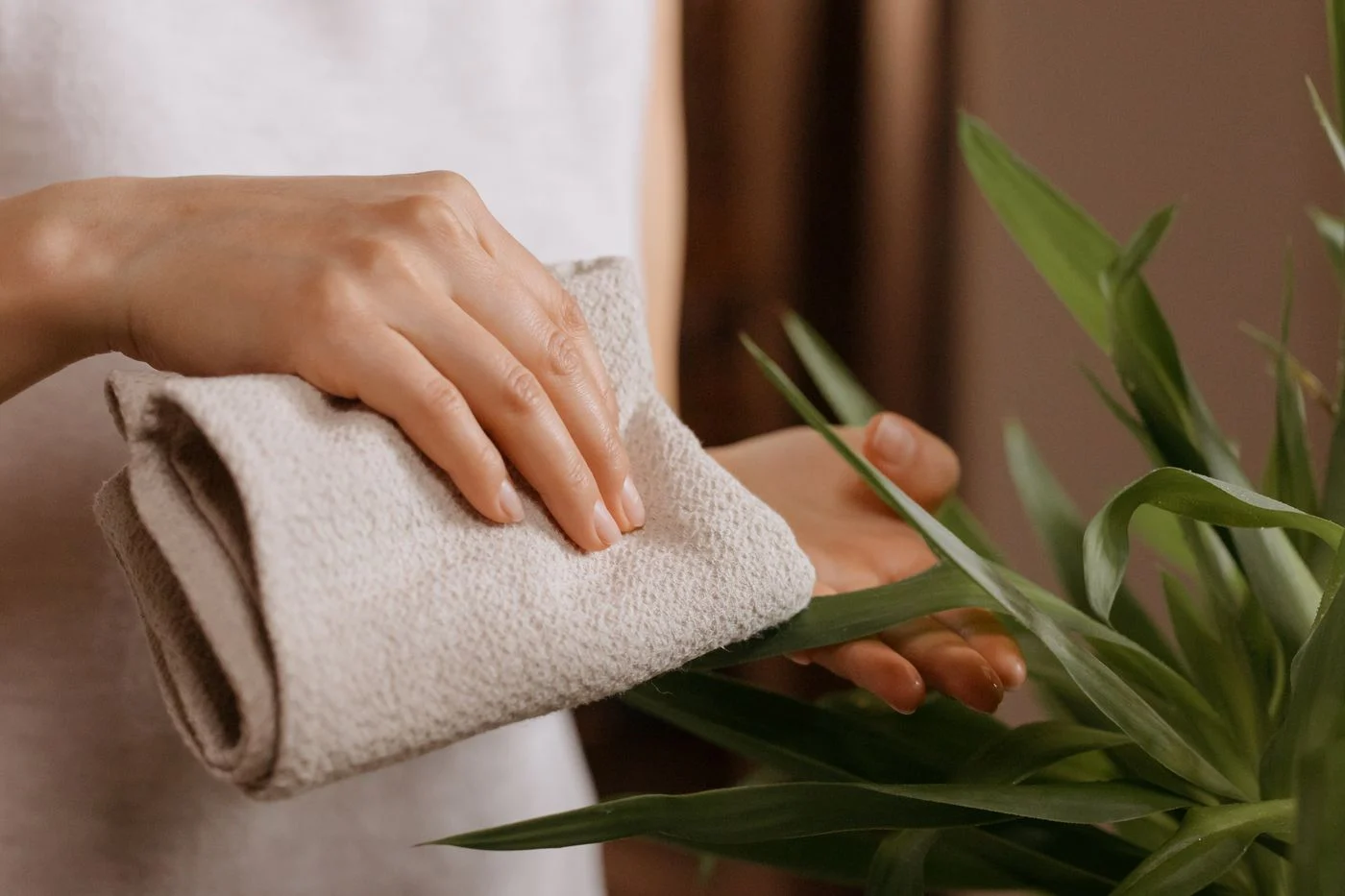
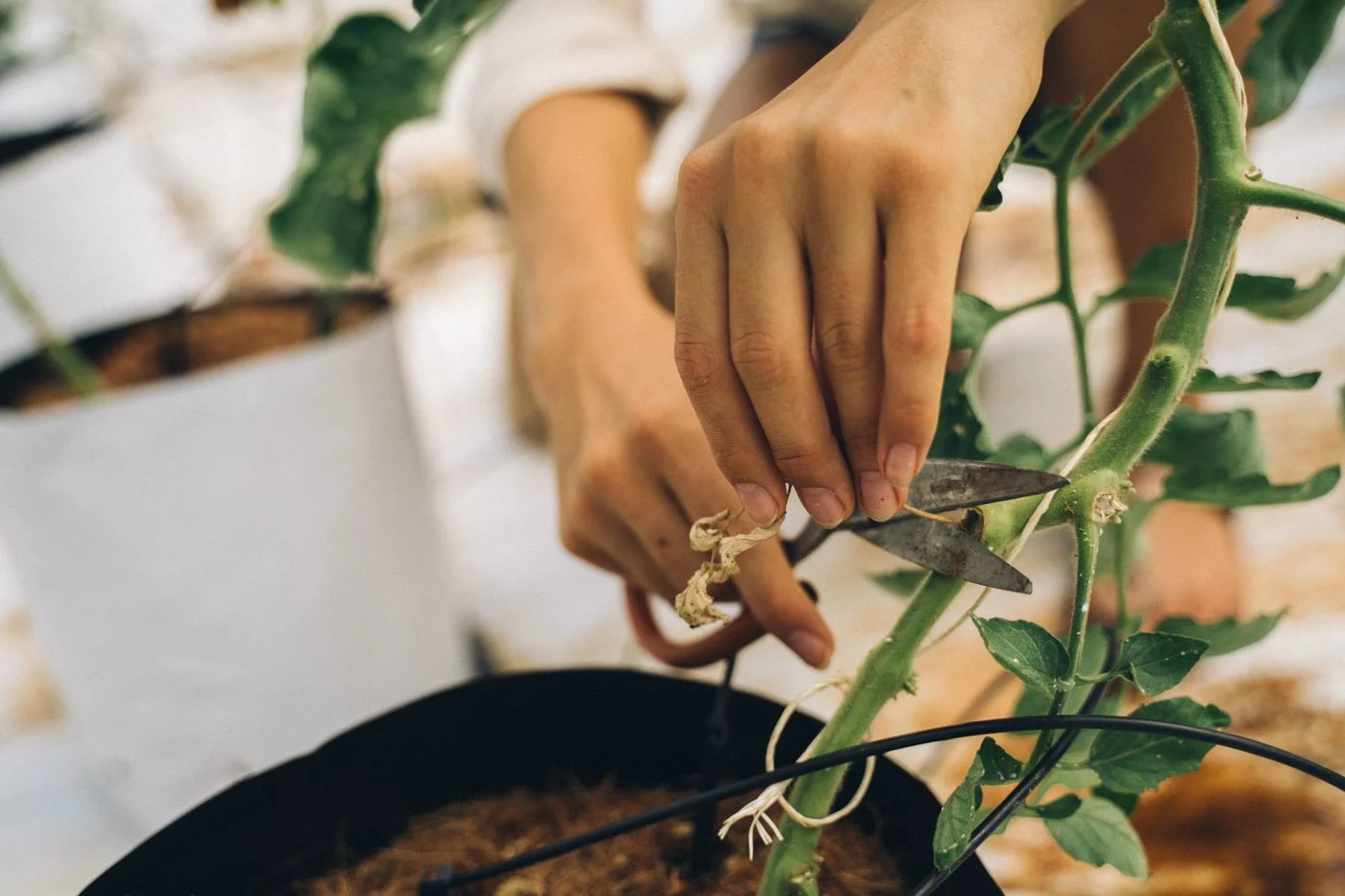
Prepare a wipeable surface and an appropriate clean tool. Support the plant so you do not pull neighbouring shoots. Dead material may sometimes detach easily; if it remains firmly attached, do not tear at it. The appropriate cutting point depends on the growth habit and should follow the plant's care guidance.
For species with irritating sap, follow the relevant protective precautions. Avoid unnecessary contact with your face or other plants during the work. Clean tools between affected specimens using suitable guidance, especially when disease is suspected. Damaged or unsuitable scissors can crush tissue and make a small care task unnecessarily difficult.
Check the compost surface too
Collect loose dead material from the growing medium instead of hiding it beneath fresh compost. At the same time, look for standing water in the outer pot or an unusually dry rootball. This is not a diagnosis, but it may indicate which care conditions need attention next.
Dispose of the material according to its condition and local arrangements. Do not leave it on furniture or among the pots. Clean the work area and dry suitable surfaces if they became wet.
Observe what follows
Check new growth and remaining leaves after the work. If the same damage quickly returns, do not change light, water and fertiliser at random all at once. Identify the plant and seek an appropriate explanation. Removing dead material makes subsequent changes easier to see; it does not automatically remove their cause. Keep the earlier photograph so you can compare the location and extent of any new damage rather than relying on memory.