Rehearse the watering round
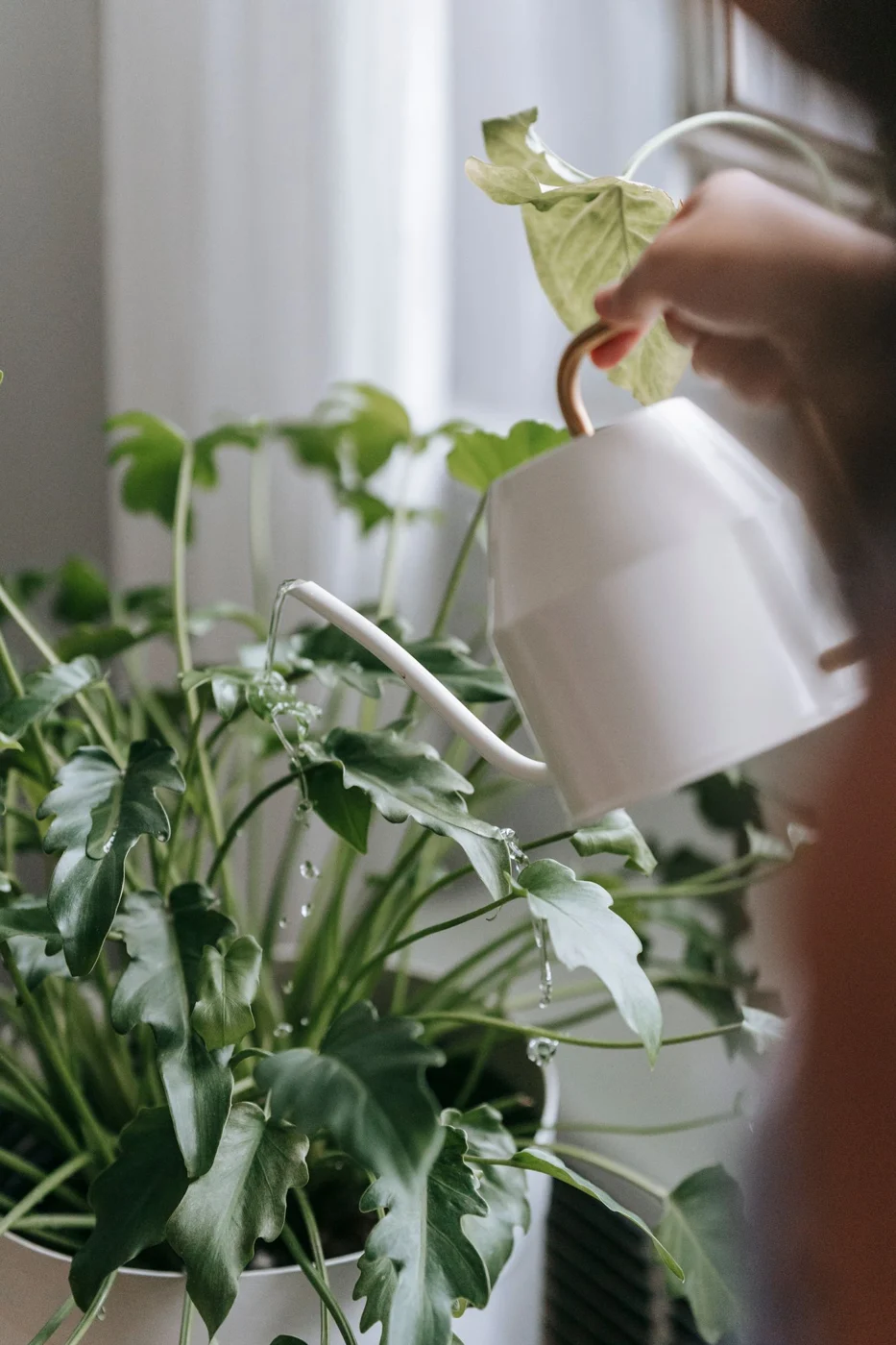
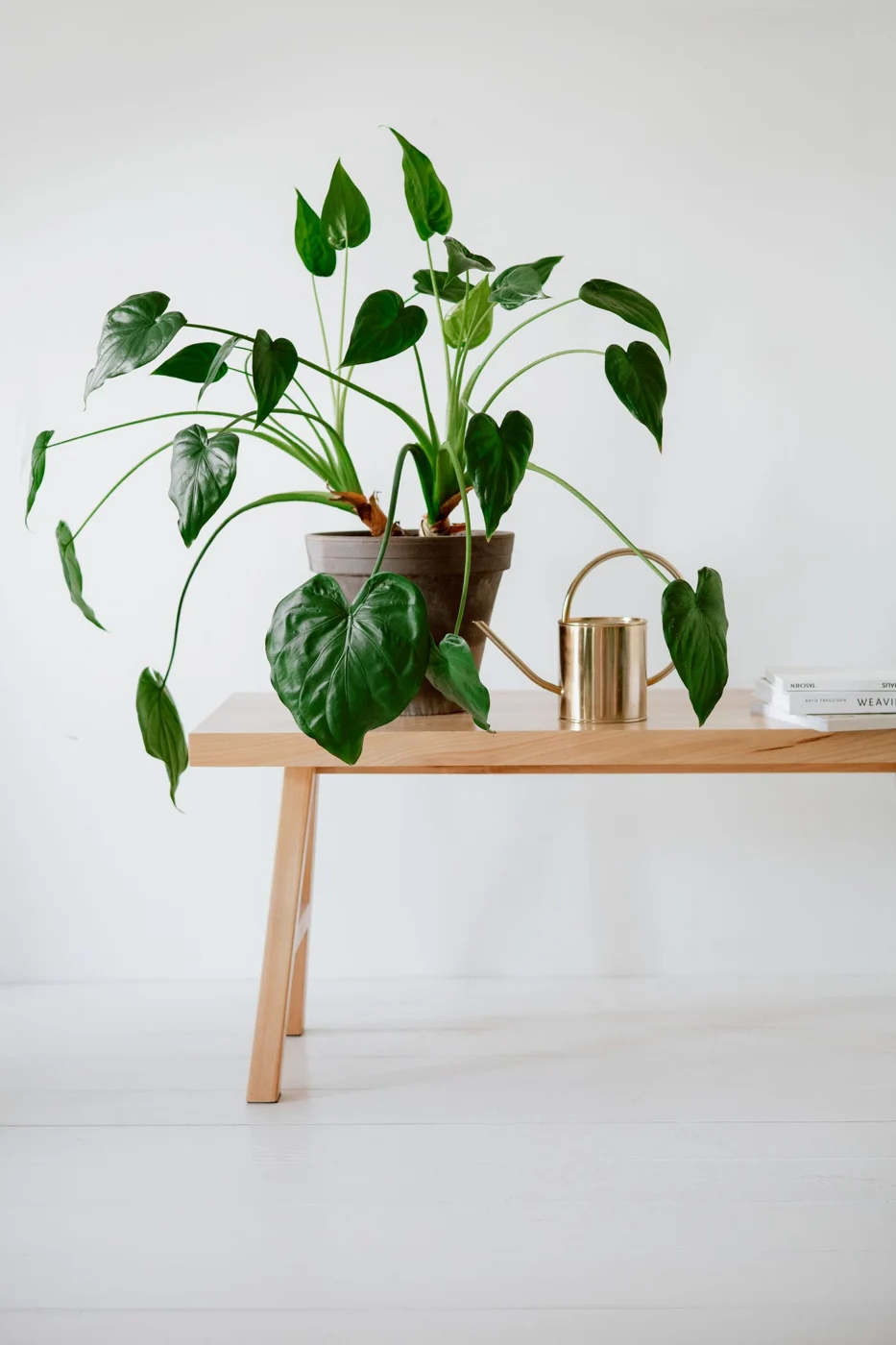
Walk the route from the tap to your plants. Where do you fill the can, where does it drip afterwards, and where can you put it down? If its only storage place is distant, it will probably remain on the windowsill. Look for an accessible position with a suitable wipeable surface rather than using any empty shelf.
Try the can while full. A long spout can catch on the side of a compartment, while a broad handle needs extra height. Store it where it can be reached without tipping. Plant stands and electrical equipment should not become temporary landing places for dripping objects.
Separate wet and dry items
Scissors, a plant stake and a packet of ties need different storage from a wet saucer. Allow cleaned items to dry before putting them into a closed box. A removable tray can collect small amounts of dirt and be cleaned separately. Inspect the underside too, so moisture cannot remain unnoticed beneath it.
Do not leave soil and plant debris among clean tools. Remove them after use and clean tools according to their materials and instructions. Store cutting tools with their blades protected. Choose a position that keeps unsuitable items away from children and pets. An open basket can look attractive but is not right for every accessory.
Limit the supplies
Keep supplies that match the plants you actually have. Several partly used bags of different growing media can quickly occupy more space than the tools. Retain products in their labelled packaging and follow storage instructions. Never transfer fertiliser into unlabelled drinks bottles or food containers. Even a very tidy shelf should not make mistaken identity easier.
Small items can be grouped by activity: tying, repotting and cutting. There is no need for a separate box for every object. Position the frequently used can so it can be removed independently of occasional supplies.
For a small plant collection, one removable compartment may be enough: the dry can at the front, a narrow tool sleeve beside it and a labelled packet of ties behind. Repotting supplies stay separately because they are needed only occasionally. With many plants across several rooms, a portable container may suit the regular round. Do not fill it with every spare supply. It should accompany the current task and be easy to put away afterwards. Test the filled weight rather than judging an empty basket in a shop.
Reset after the work
At the end of the watering round, check whether water reached the floor or furniture and dry affected suitable surfaces. Return dry tools afterwards. This small finishing step prevents a temporary plant-care area from becoming a permanent collection of damp cloths, empty pots and unidentified bags. If an item repeatedly remains outside its container, test a more accessible position before buying additional storage.