Climbing or trailing
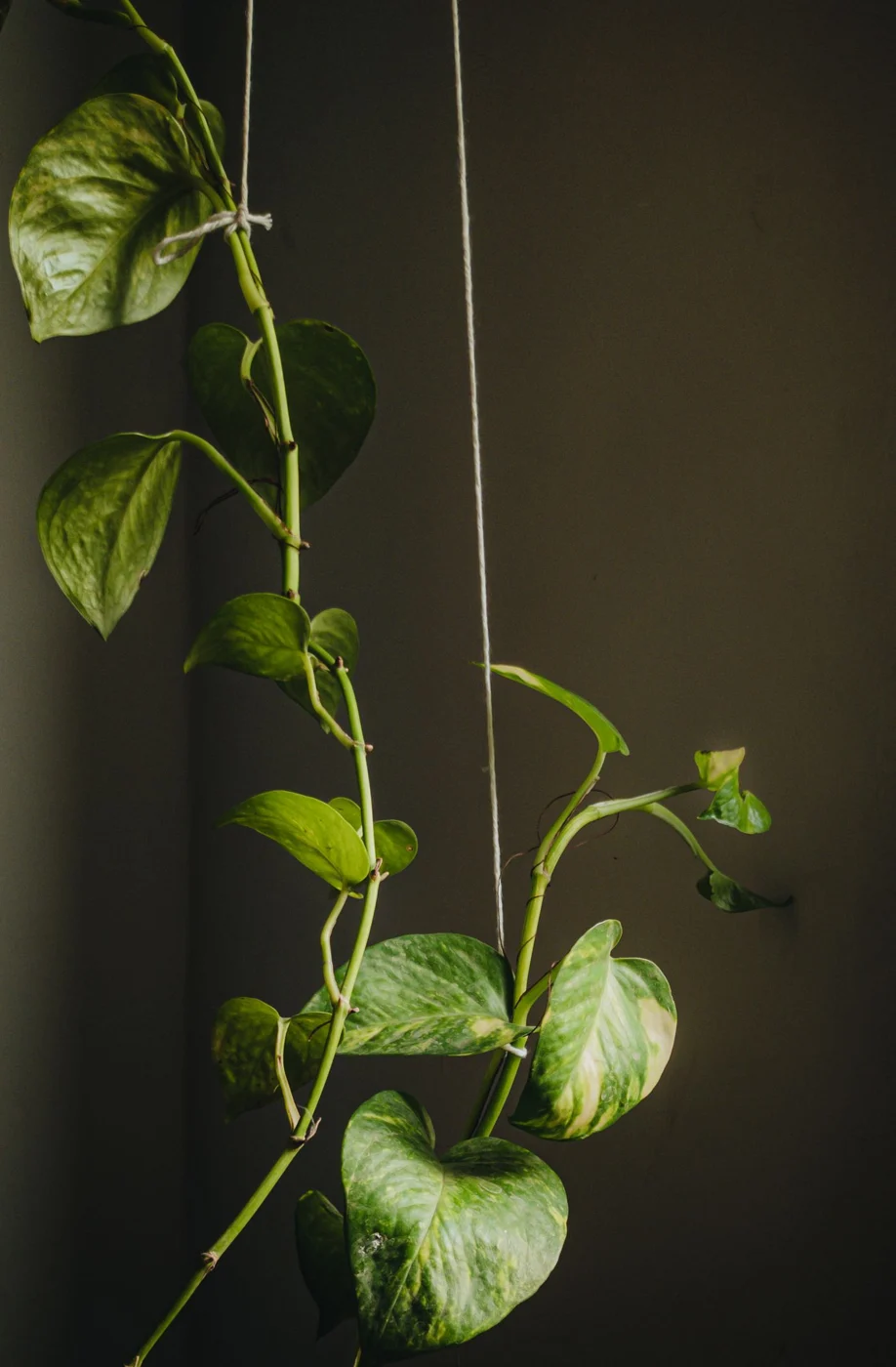
Look at how the plant produces new growth. A long flexible shoot can be guided differently from an established woody stem. Some plants are deliberately grown as trailers; others benefit from a suitable climbing surface. Identify the plant and consult its species-specific care guidance before choosing a support. A decorative grid may suit one plant and offer little to another.
Consider where the mature plant will stand. A support changes its outline and potentially its centre of gravity. On a narrow windowsill, a taller arrangement may interfere with curtains or an opening window. Put the pot in the intended position and assess the space above the existing leaves as well as around them.
Check the base first
A tall support in a small, lightweight pot is not a stable combination. Check whether the system is intended for your pot size and how it is fixed. It should sit securely in its designated growing medium or attach properly to the container. Do not push a thick stake blindly through a densely rooted rootball. If repotting is already necessary, you can plan the position with the roots visible.
A heavy outer pot can affect stability but does not fix a loose connection between the support and the growing pot. Do not lift the arrangement by its framework. Move the whole pot gently from its base and watch for twisting or tilting. You still need to be able to water the plant afterwards.
Guide shoots loosely
Introduce new shoots gradually instead of forcing a long, hardened stem into a tight bend. Use suitable plant ties and allow space for growth. Thin wire or tightly pulled string can create pressure points. The tie should hold the shoot in position without constricting it.
Inspect the attachments while watering. Has a tie become tight, has a shoot escaped, or is a leaf pressing against the window? Small adjustments are easier to make early. On a framework with several rails, use the empty areas so that shoots do not all overlap in one place. Work with the plant's natural direction rather than trying to impose a rigid pattern.
A support you can undo
Imagine a plant whose shoots already reach from a shelf to a wall hook. At the next repotting, you would need to release the wall attachment before moving plant and pot together. A support that belongs entirely to the pot makes that sequence easier. A wall-mounted route, however, uses otherwise empty space. The useful question is which connection you can undo later without damaging shoots. With a wall arrangement, keep the starting point accessible and avoid threading stems through permanently closed eyelets.
Look behind each attachment, not just at its front. A tie can trap a leaf stalk beneath the main shoot even when everything looks tidy from the room. Turn the pot carefully as far as its setup permits and follow the route of every secured stem. Leave some young tips free instead of fixing every end. This allows space for the next growth. Where a shoot has already attached itself to a surface, do not pull it away merely to make the arrangement more symmetrical.
Keep access for care
A fully covered framework can be difficult to dismantle. Leave a way to inspect the inner pot and remove excess water. Note which parts will need to move together at the next repotting. A useful support brings the growth habit, care routine and available position together; it is not necessarily the most conspicuous structure.