Check from the seated position
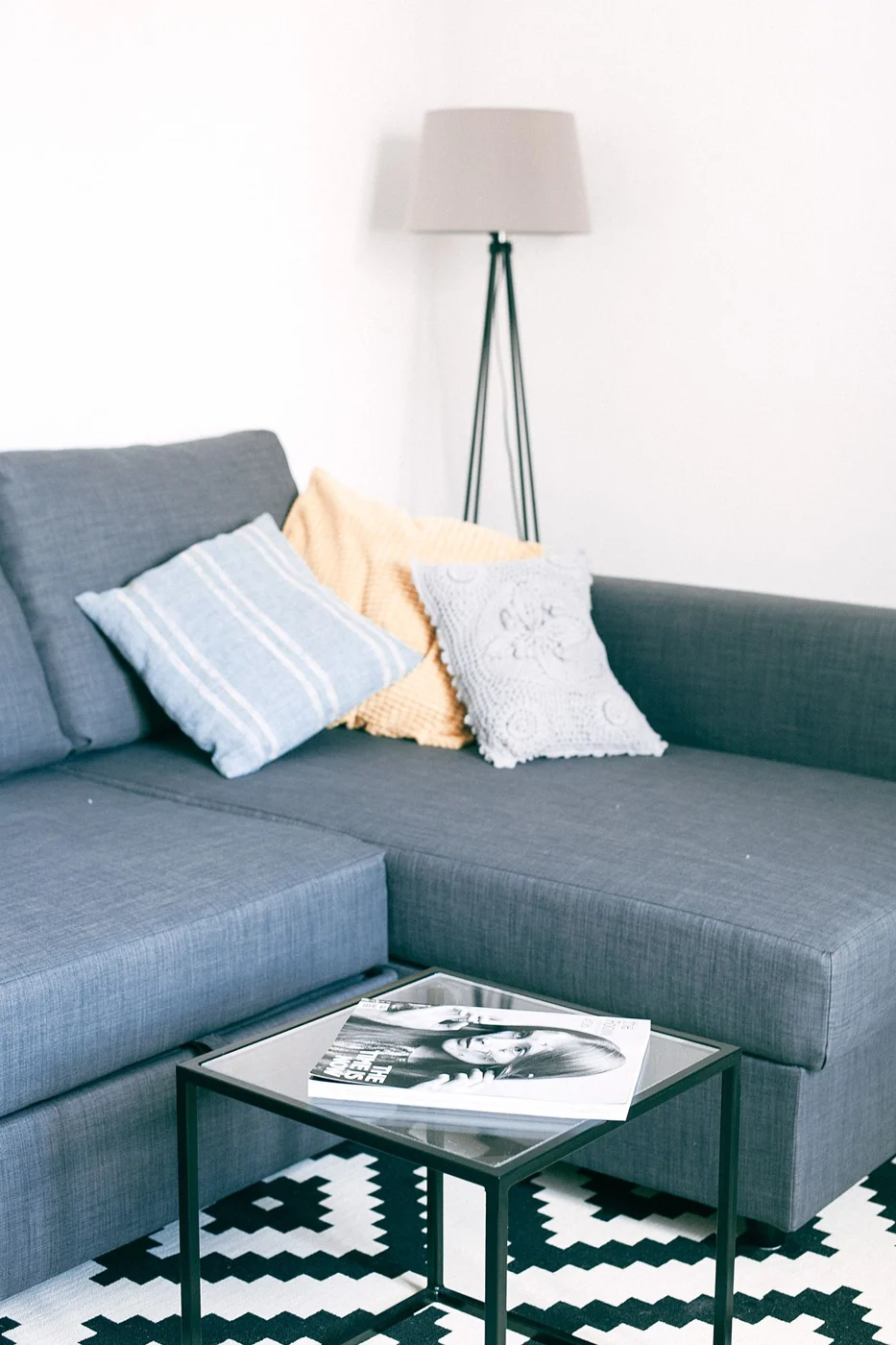
Sit as you normally do on the sofa. With deep cushions, the front edge may be some distance from your upper body. A table that seems close enough when you are standing can therefore be awkward to reach while leaning back. Try reaching for an empty cup without pulling yourself a long way forward.
Table height also changes the movement. A low top requires a different reach from one near the height of the seat cushion. A higher table may interfere when you stretch your legs out. Compare it with the sofa's actual height while someone is sitting on it, not just the catalogue dimension of an unloaded cushion.
Test the space while moving
Use a cardboard box to represent the proposed table edge. Stand up, sit down and move to another seat. The gap should accommodate feet without having to serve as the room's main passage. If the only route to the window runs through it, reconsider the position of the seating group as a whole.
A reclining section, pull-out seat or separate footrest changes the arrangement. Mark its largest operating position. If the table must move to make room, provide an accessible place for it to go. A small top does not necessarily make a heavy table with delicate legs convenient to move.
Try a different shape
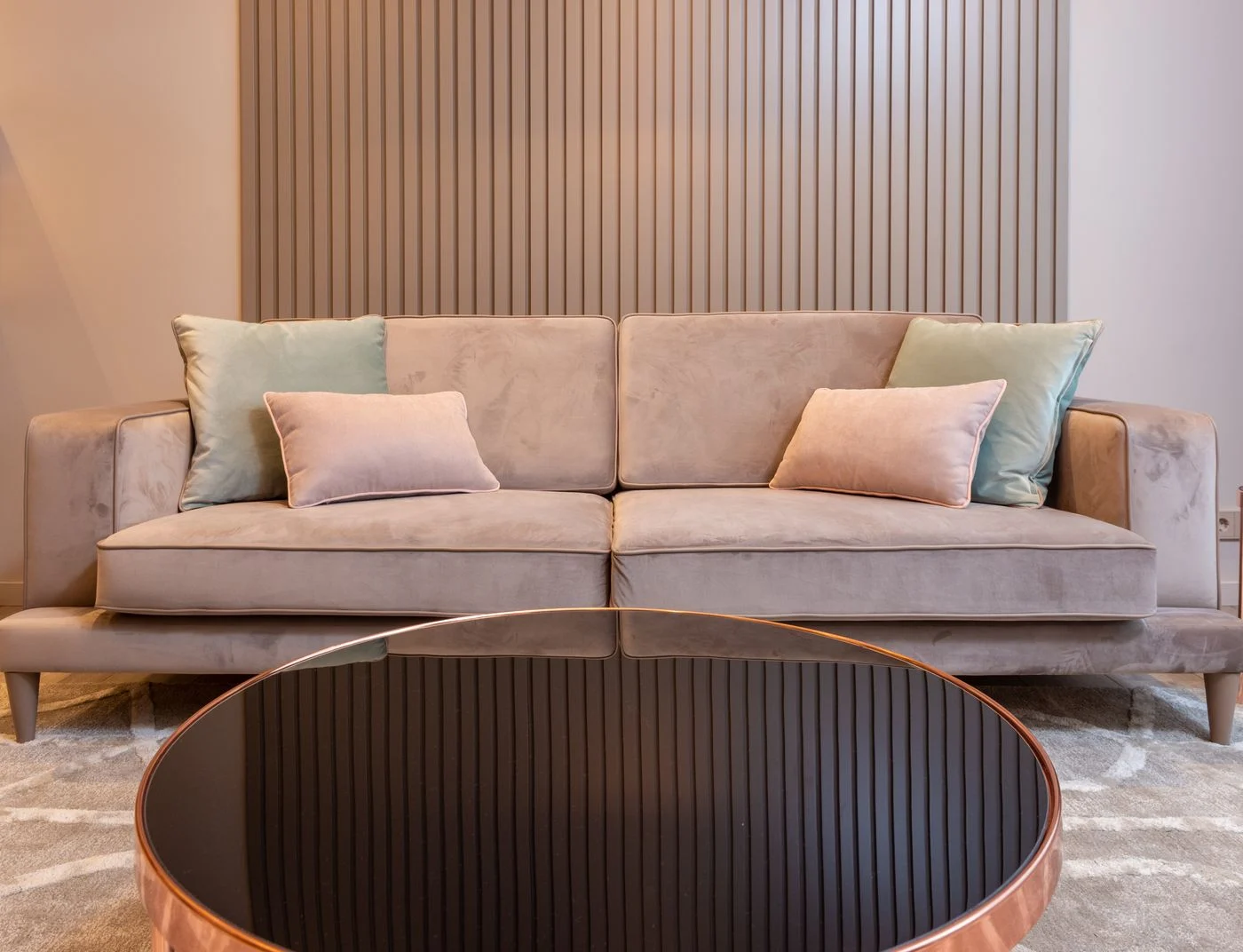
Two smaller tables can serve separate seats, but they also introduce more edges and feet. A long top may suit people sitting side by side. A round one removes projecting rectangular corners beside a passage, although its widest diameter still occupies space. Compare complete footprints rather than assuming that round means compact.
In a particularly tight room, an occasional table beside the sofa may be enough, leaving the area in front open. Try this arrangement for an evening with furniture you already own. Notice where the remote control, book and drink actually need to go. That observation helps distinguish a missing function from an expectation that every living room ought to contain a coffee table.