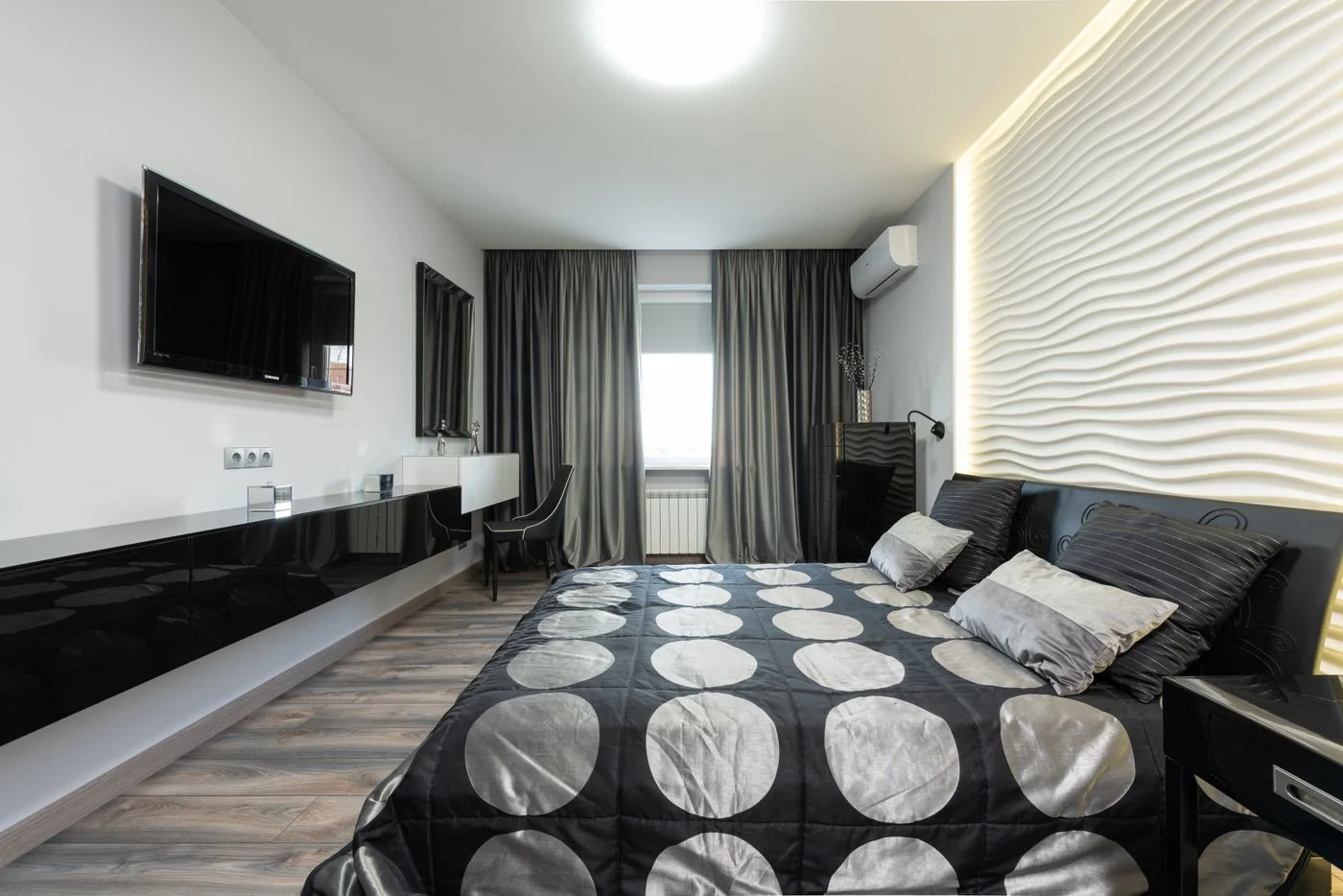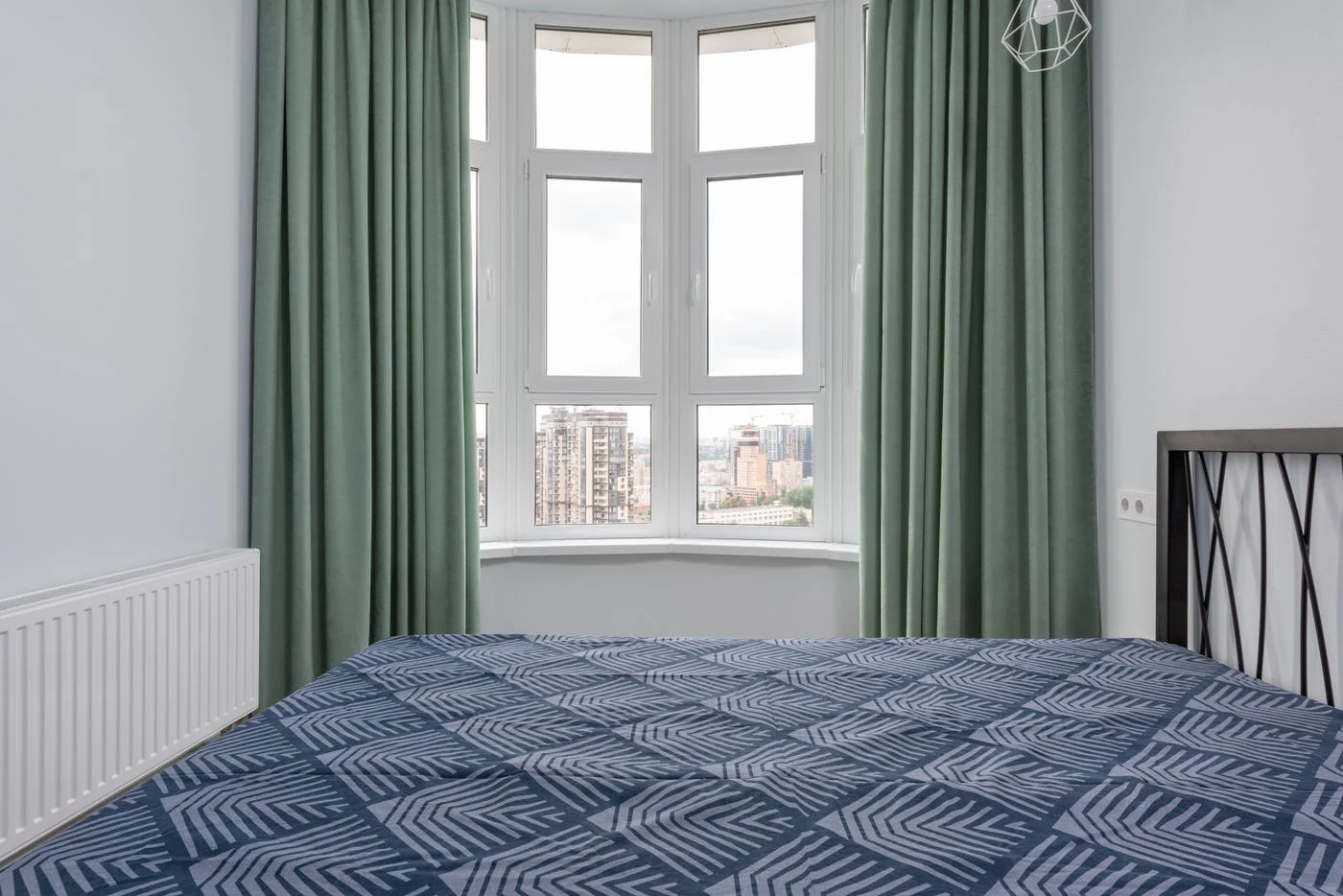
Decide how much of the bed to cover
A bedspread can cover only the foot of the bed or almost the entire surface. In a small bedroom, that decision matters more than a particular decorating style. A large cover that is removed completely every evening needs somewhere to go. A narrower layer at the foot is easier to fold back, but leaves more of the bedding visible.
Measure the sleeping surface, then decide separately how far the fabric should fall at the sides and foot. A bed against a wall does not need equal overhang on both sides. Include drawers beneath the bed and the height of the frame. Fabric that hides handles or becomes caught when a drawer opens adds another small task every day.
A bed used for seating during the day
In a small guest room or studio, the bed may serve as seating during the day. The spread then needs to stay in position as well as look calm. Test several sitting movements and see whether the bedding underneath shifts substantially. A loose, very smooth layer may not suit that purpose.
Consider which area needs protection. If people mainly sit briefly at the foot, limited coverage may be enough. That simplifies washing and the evening changeover. A full heavy spread is not automatically better when only a small part of the bed receives that use.
Try the folded volume
Fold an existing blanket to roughly the packed size of the proposed bedspread. Put it on the intended chair or shelf. Is there still room for clothing? Can the nearby door open? This simple trial shows whether the bedspread fits the room when it is not performing its decorative role on the bed.
A heavy fabric falls differently from a light one and cannot be shifted as easily with one hand. If the bed is against a wall, you still need to reach across its width to straighten the cover. Check whether that would require climbing onto the bed or moving furniture each day. A smaller covering may then be a more workable choice.
Work with the existing bedding
The spread does not need to repeat every colour in the bedroom. With patterned bedding, one quiet area at the foot may be enough. If the whole sleeping surface is covered, the spread itself becomes the main visible textile. Judge the combination in the state in which you normally leave the bed.
Care and drying are part of the choice. Read the manufacturer's instructions and check whether the item suits your available washing facilities. A spread requiring regular professional cleaning involves different work from a washable one. Buy for the real routine and storage available. Extra decorative layers are unnecessary when their main evening function is to occupy the only spare chair.