Measure more than bench depth
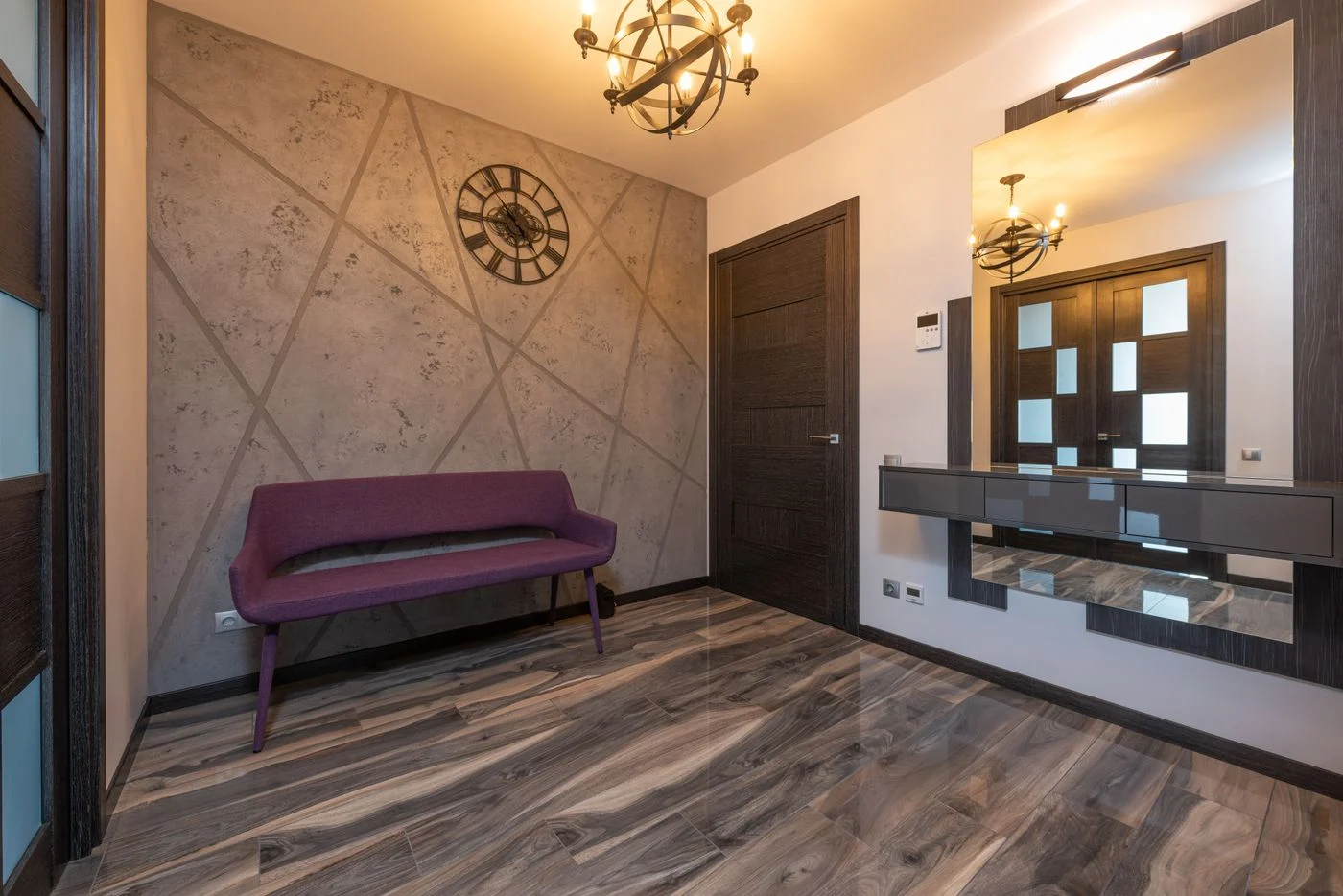
A narrow bench can fit on a plan while knees and feet project far into the passage during use. Put a suitable existing chair in the proposed position first. Put shoes on, lean forward and stand up again. At the same time, check whether another person can pass carrying a bag.
Include the entrance door and adjoining doors. The seated position should not fall within their swing. Even a small stool should not be unexpectedly pushed by an opening door. If there is no workable permanent location, an accessible seat elsewhere may be preferable to furniture that is always in the way.
Combine seating and shoe storage carefully
A bench with a shoe shelf can combine two functions if its construction is explicitly intended for sitting. An ordinary shoe cabinet is not automatically suitable. Try the height with the people who will use it; a very low bench is not equally comfortable for everyone.
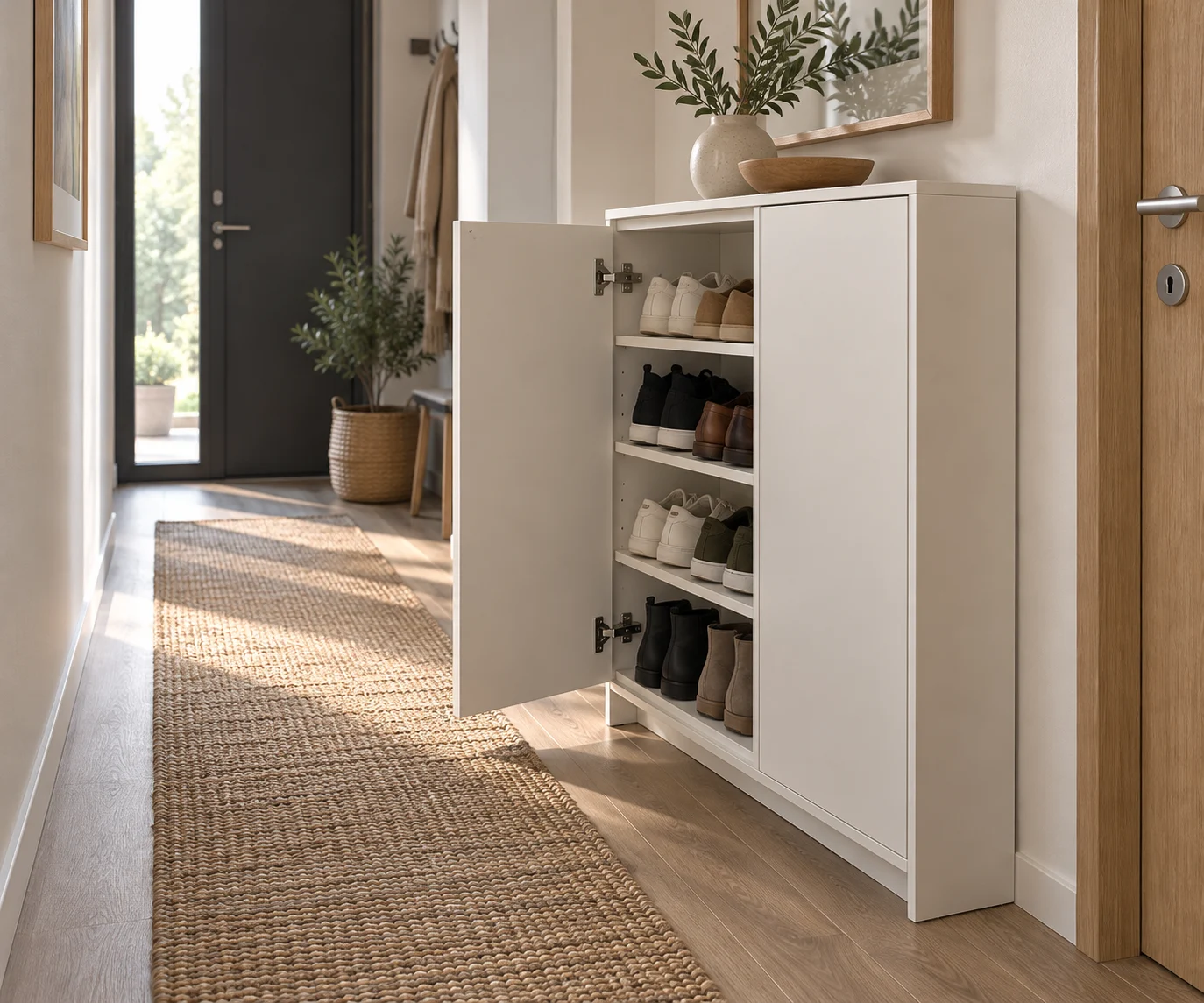
Shoes beneath the seat should not occupy the entire foot area. Wet footwear needs appropriate handling and should not disappear into a closed chest with dry textiles. A removable dirt tray may simplify cleaning if it suits the floor and furniture. Tall boots need a different clear height from low shoes.
Keep the small zone defined
A shelf for hats or a row of hooks above the bench may be useful. Hanging coats should not completely cover the seat, however. Test with the longest coats actually worn, not with empty hooks alone. Fixings must suit the surface and intended load.
Prevent the bench becoming permanent parcel storage. A separate place for incoming objects keeps its seating function available. If bags repeatedly land there, an accessible hook may be missing. The answer may be a small change to the arrival routine rather than a wider bench.
Finally, check access to the floor below. Easy cleaning is especially helpful at the entrance, where dirt from outdoors will continually return.