Measure the shoes you own
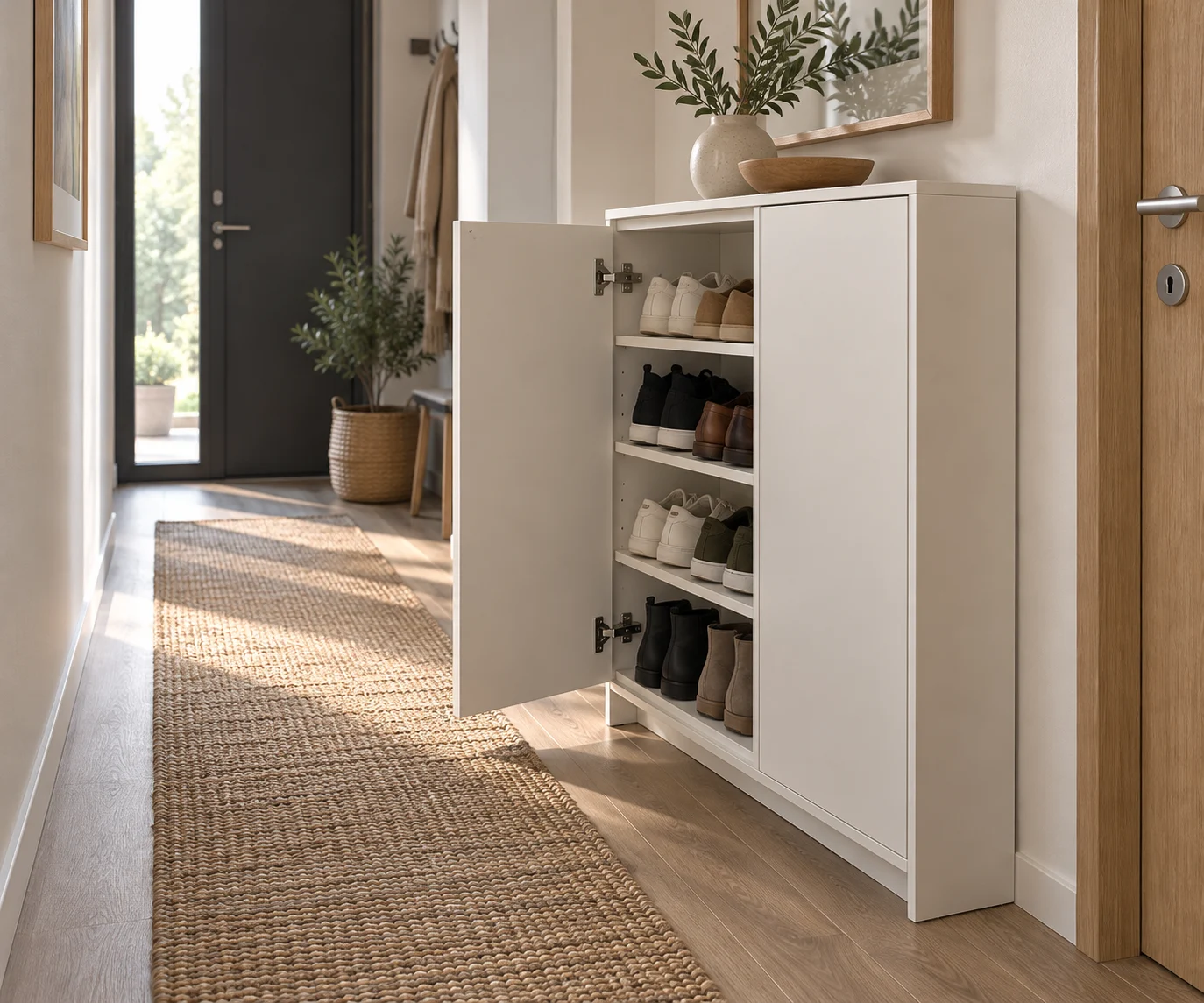
A cabinet's quoted number of pairs is only a guide. Large shoes, boots and broad soles need different compartments from lightweight summer shoes. Measure the pairs worn most often and, where possible, try a representative shoe in the shop. Overall cabinet width says little about useful internal height.
Tilting compartments arrange footwear differently from horizontal shelves. Check whether tall uppers would bend or pairs would have to be separated. Rarely worn shoes may belong elsewhere. The entrance cabinet need not hold the entire collection; its main job is to make everyday pairs accessible.
Include the open position
A very shallow cabinet may project considerably when opened. Mark the open front and stand in front of it. Can someone else pass? Does the entrance door strike the open compartment? A narrow closed outline does not by itself create a functioning hallway.
Account for skirting, wall clearance and required restraint. Some models are not intended for use without wall fixing. Read the instructions before buying if services, wall material or tenancy conditions affect installation. Improvised spacers should not alter the intended construction.
Plan ordinary use and cleaning
Wet or heavily soiled shoes should not immediately be squeezed between dry pairs. Provide a suitable place for them to stand and dry, following the care requirements of both footwear and furniture. A removable dirt tray is easier to clean than a permanently concealed floor area.
For a shared cabinet, allocate space by person or use. A compartment for current shoes avoids searching the whole collection daily. Leave a little capacity for changeovers rather than filling every space tightly.
Give the top a limited purpose too. If keys, post, bags and parcels accumulate there, the hallway problem merely moves upwards. A small key position and separate place for incoming post are often sufficient.
Rotate the current pairs
A clear exchange between current and stored footwear can help a small household. When another pair comes to the entrance, one not currently needed returns to its other suitable location. Adapt this practice to the number of people and the weather rather than imposing a universal pair limit. Its purpose is to stop accessible entrance storage gradually becoming the entire shoe archive. Where weather changes frequently, deliberately allow several current options. Reviewing that small selection is easier than repeatedly reorganising a cabinet filled with every season's footwear.