Let the plants determine their positions
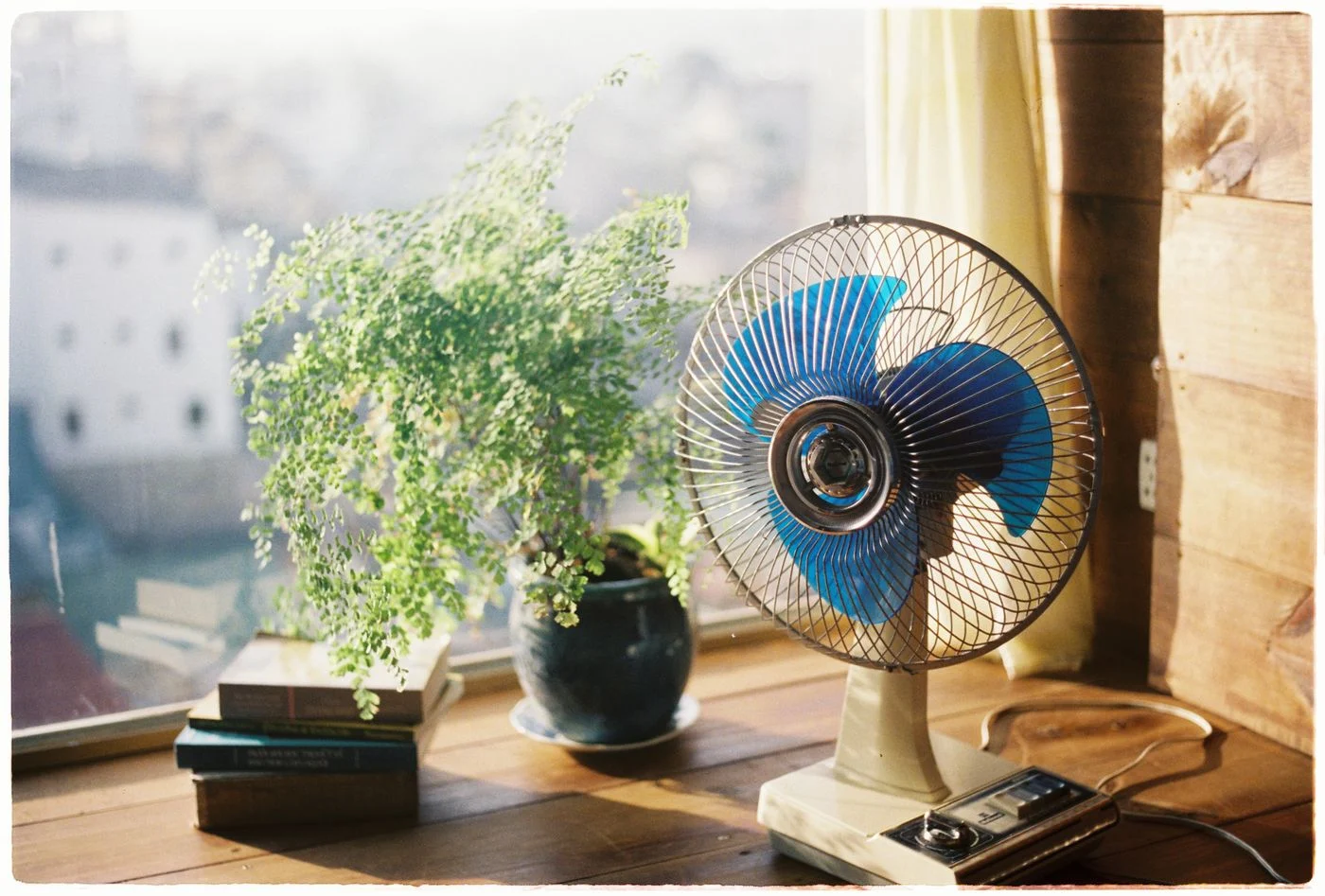
A table beside a window provides more surface than a narrow sill, but each part receives different light. Check which plants need to be nearer the glass and which suit the more distant area. Arranging purely by height makes sense only after the plants' location requirements have been considered.
Do not automatically put tall plants in front of smaller ones. They can block light, especially where illumination arrives from only one side. Look towards the arrangement from the window and identify which leaves have an unobstructed relationship to the light. Rotate or reposition plants according to their needs and observed development rather than for symmetry alone.
Check capacity and surface
Several pots put considerable weight on a small area, particularly after watering. Establish that the table suits the actual load. A light decorative side table is not automatically a suitable plant stand. Include stability where large plants project beyond its edges.
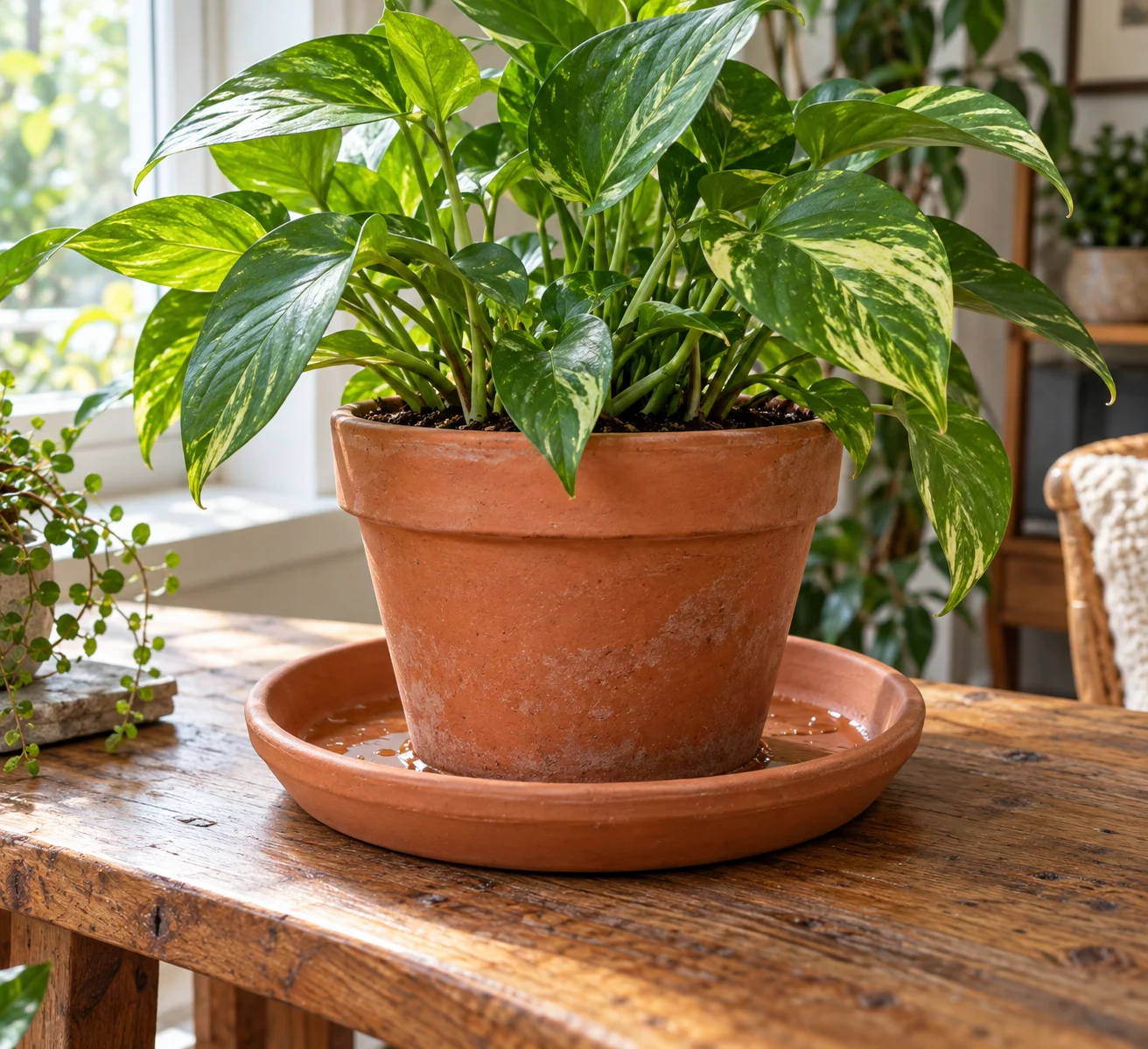
Protect the surface appropriately for its material. Use suitable saucers and inspect beneath them regularly. A protective mat does not make delicate furniture indefinitely waterproof. Avoid returning wet containers without checking the support surface. Water marks can develop before any obvious overflow is noticed.
Keep every pot reachable
Leave enough space to lift an inner pot or check moisture. If the rear row can be reached only by moving every front pot, care becomes unnecessarily complicated. A smaller collection may work better in this location than a completely filled tabletop.
Also check the window handle, curtains and radiator. The table should not prevent airing the room or conceal necessary openings and connections. Give the watering can and care materials their own place instead of pushing them among leaves. After several weeks, assess whether the arrangement remains convenient. Adjust spacing as plants grow; gaps between young plants are not automatically wasted space. They can be the access and growing room that makes the whole setup manageable.