What has changed?
Write down why you want to repot. Does the rootball dry unusually quickly, has the plant become unstable, or has the growing medium collapsed? One visible root at a drainage hole does not explain the whole situation. Light, season and previous care also affect growth. A new container will not correct an unsuitable position.
Inspect the outside of the pot. Is there drainage, is water standing inside the outer container, and can the growing pot be lifted out intact? Resolve obvious drainage problems first. This lets you assess the plant rather than simply replace its decorative cover with something larger. If there is visible damage, identify the cause before adding the disturbance of repotting.
Inspect the rootball gently
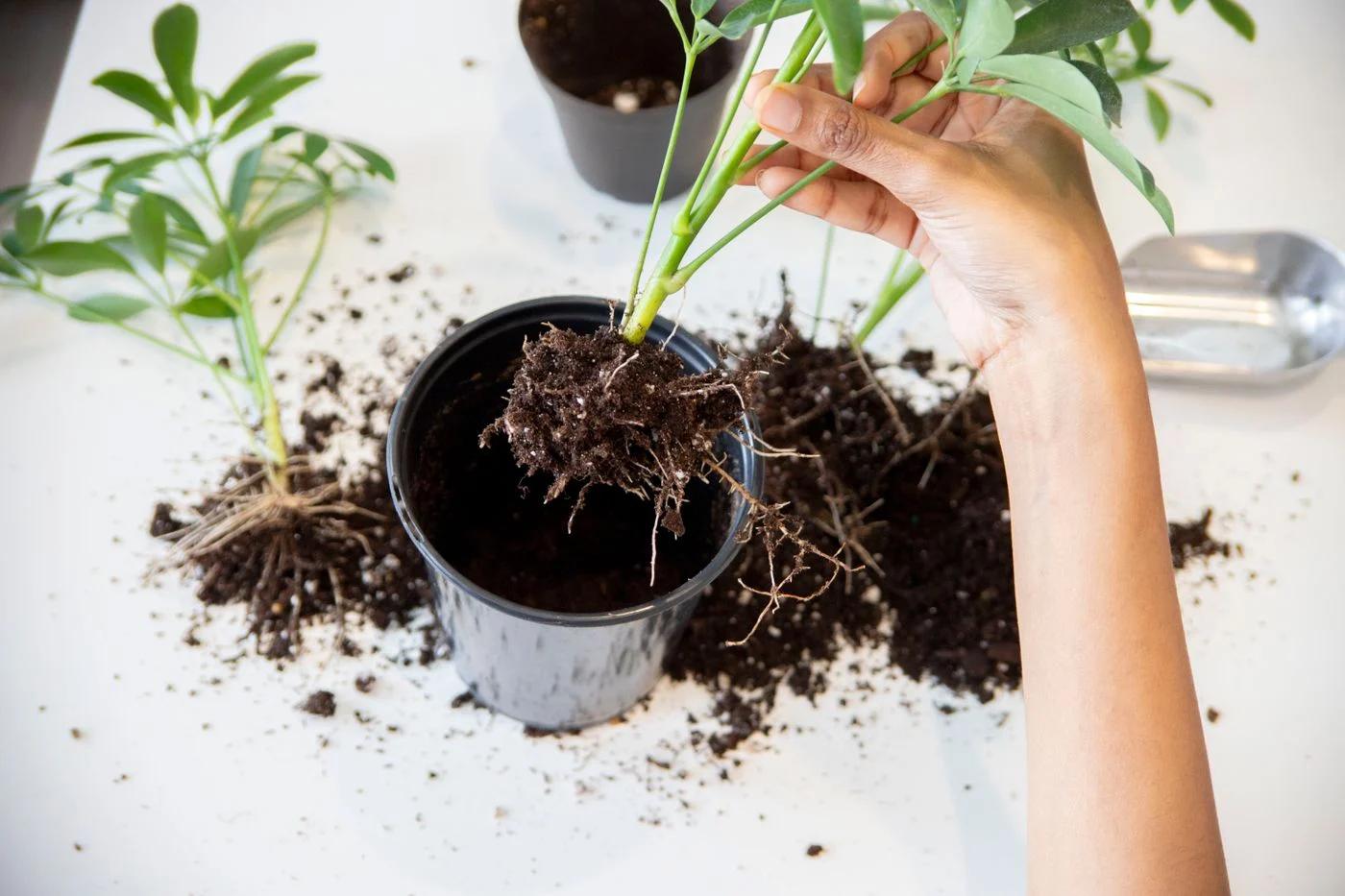
If the plant can be handled safely, ease the pot away while supporting the rootball. Do not pull hard on the shoots. If the container is firmly rooted or the plant is large and heavy, get help and use an appropriate work surface. Species-specific guidance will explain how carefully that plant's roots need to be treated.
Look at the balance between roots and remaining growing medium. A densely rooted ball is different from a plant that has produced a few roots around the edge. Unusually soft or discoloured roots should not simply be hidden under fresh compost. Seek an appropriate diagnosis and treatment for the plant rather than automatically increasing the pot diameter.
Similar symptoms, different decisions
One plant has recently moved closer to a window and its pot becomes light more quickly. Another has stayed in the same place, but inspection reveals little compost between densely packed roots. Both may need more frequent watering, yet only the second presents clear evidence of restricted root space. Consider changes of position alongside the condition of the rootball. The question is not simply whether watering has become inconvenient, but why. If you cannot inspect the roots without disturbance, a photograph of the surface together with your observations provides a starting point.
Judge a new container by its interior. Try placing the old pot inside it before taking the plant out. Does this leave a modest margin, or would you have to fill a large extra volume with compost? A bulbous decorative pot can look suitable from outside while providing substantially more space within. Drainage, shape and usable volume are more informative here than a printed size description alone.
Choose an ordinary day when you can keep an eye on the plant afterwards, rather than the evening before a trip. You can then observe drainage, stability and any change in drying. A photograph before and after records what actually changed. For a healthy plant without an evident need for more root space, deciding to leave things alone for now is a valid result of the inspection.
Prepare the next container
Choose the container and growing medium for the plant, not solely for the room's colour scheme. A much larger pot changes water retention; extra compost does not always create better conditions. Check suitable size guidance for the species and inspect drainage holes before adding compost. The old decorative outer pot may no longer fit.
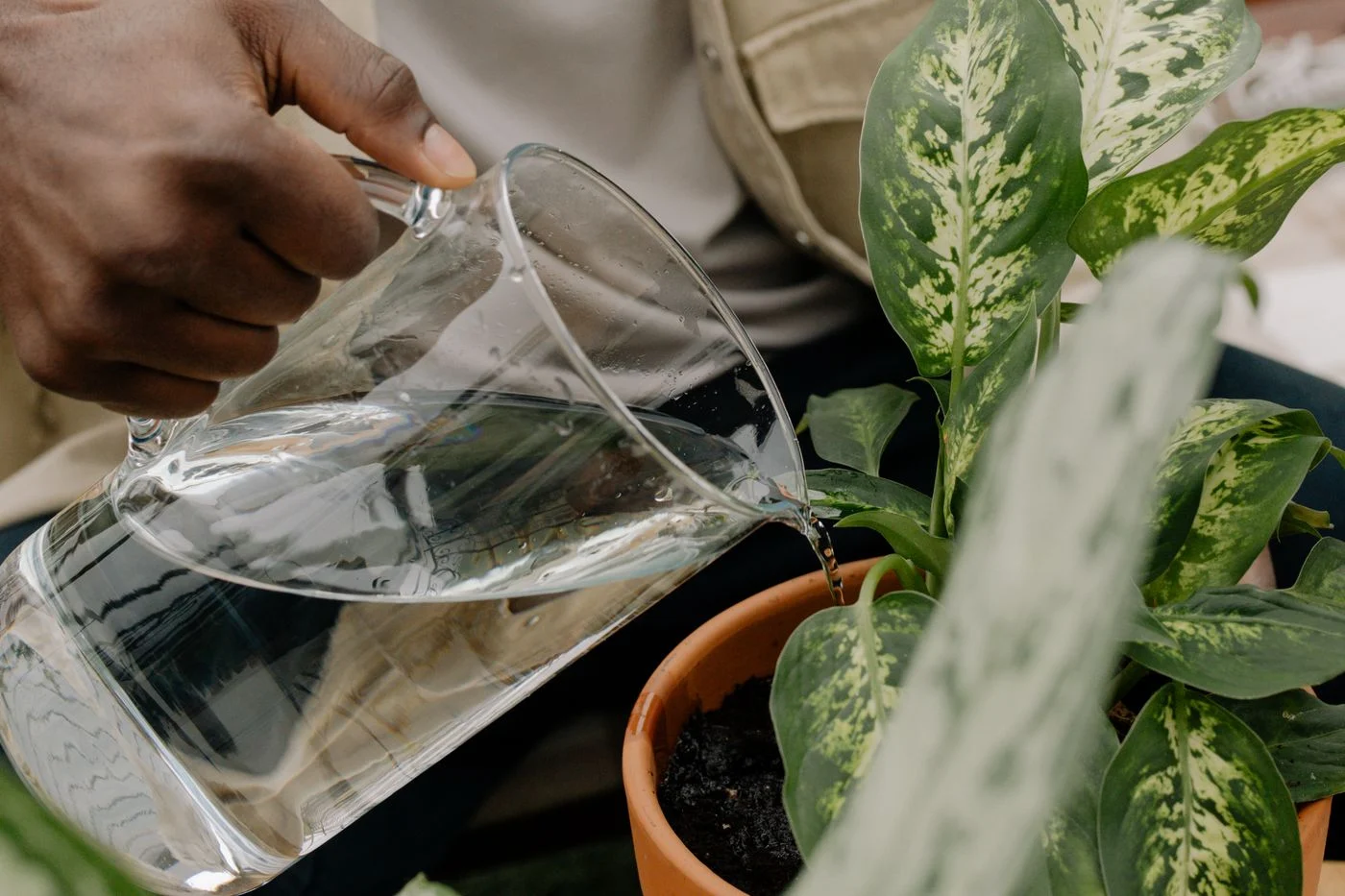
Prepare a protective surface, tools and a way to collect water. Also decide where the plant will stand afterwards. Care does not end when it is placed in the new pot: observe how quickly the fresh growing medium dries. Do not automatically repeat the old watering quantity. Record the date, compost and pot size so that later changes are easier to understand. If inspection shows that repotting is unnecessary, returning the plant to its existing pot is a reasonable outcome.