A windowsill is not automatically a desktop
A broad sill can look like additional working space, but it is not necessarily designed for equipment or working loads. Check its construction and intended use before treating it as part of the workstation. A separate suitable surface is often easier to plan than an improvised extension across a radiator or sill.
Measure with the window open. An inward-opening sash may occupy exactly the place intended for the screen. The handle must remain accessible too. An arrangement that works only while the window stays closed is usually incomplete for a regularly used room.
Give a few essential objects clear places
Decide which equipment and documents genuinely need to remain on the surface during work. Small speakers, decorations and supply containers are not automatically essential. Allocate space to the screen, keyboard and mouse first. Only then decide whether a lamp or small paper tray can also fit on the top.
If a clamp lamp is intended to save area, check the desk edge and the arm's movement. A narrow shelf above the desk must not prevent window operation. Keep cables away from the moving sash so they cannot be trapped or pulled outside when the window opens.
Treat daylight as a changing condition
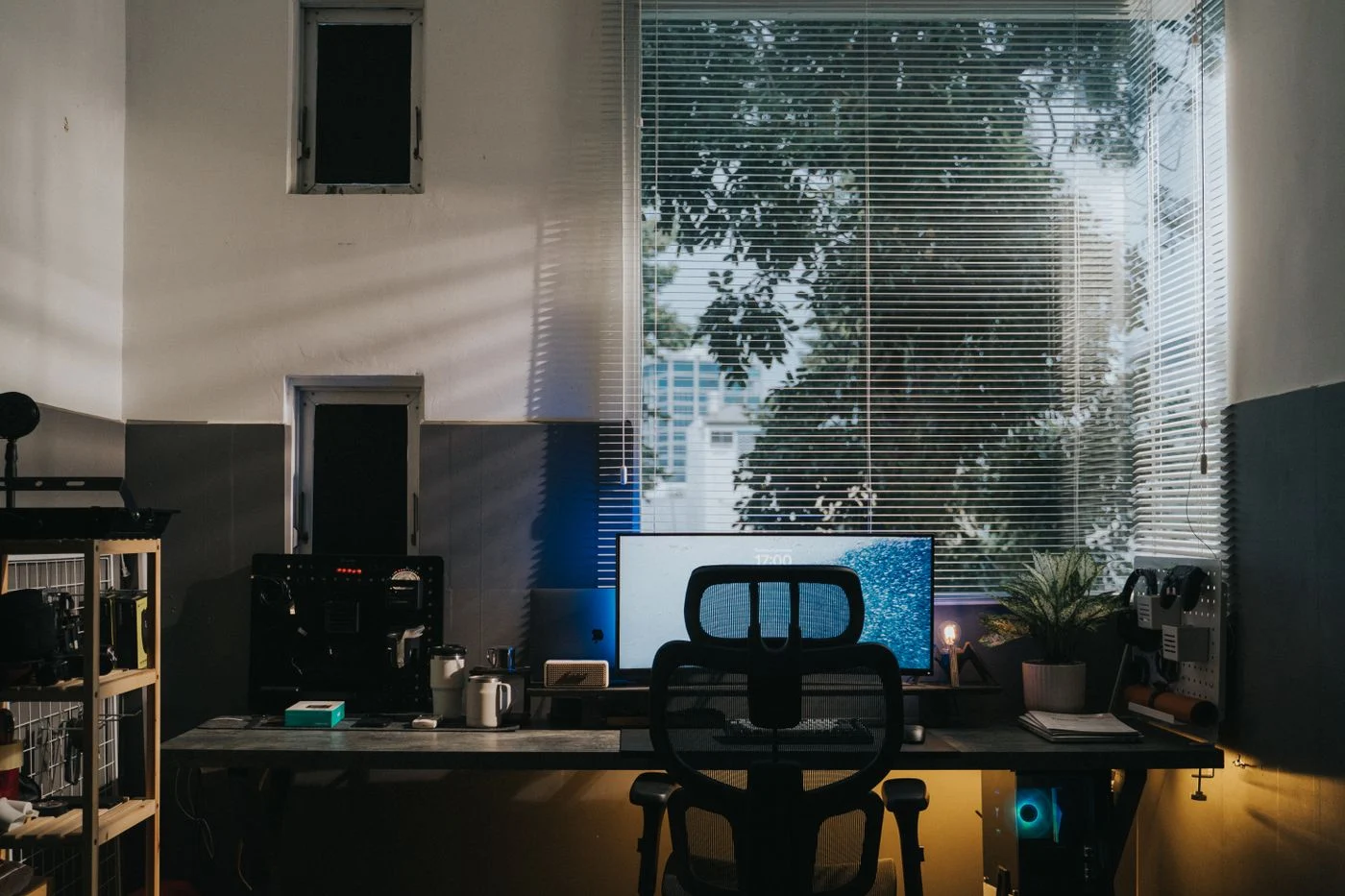
Observe the place at the times it will be used. An attractive view may come with a very bright area behind the display. A side-on position or suitable adjustable shading may work better. Test the particular arrangement rather than assuming a window seat is inherently ideal for computer work.
Where a radiator stands below the window, preserve its required clearances. Do not cover it with an enclosed storage box merely to gain a larger apparent desktop. Plants on the sill need separate consideration: watering and electronic equipment should not share the same crowded area. If there is insufficient room for both, move the plant to another suitable location. The workspace then remains easier to use and clean without compromising the plant's care.