Describe the behaviour precisely
Open and close the affected door or drawer carefully, only as far as it moves without force. Does resistance occur at the start, just before closing or throughout the travel? Compare it with an intact part of the same furniture. This observation is more useful later than saying the cabinet is simply “crooked”.
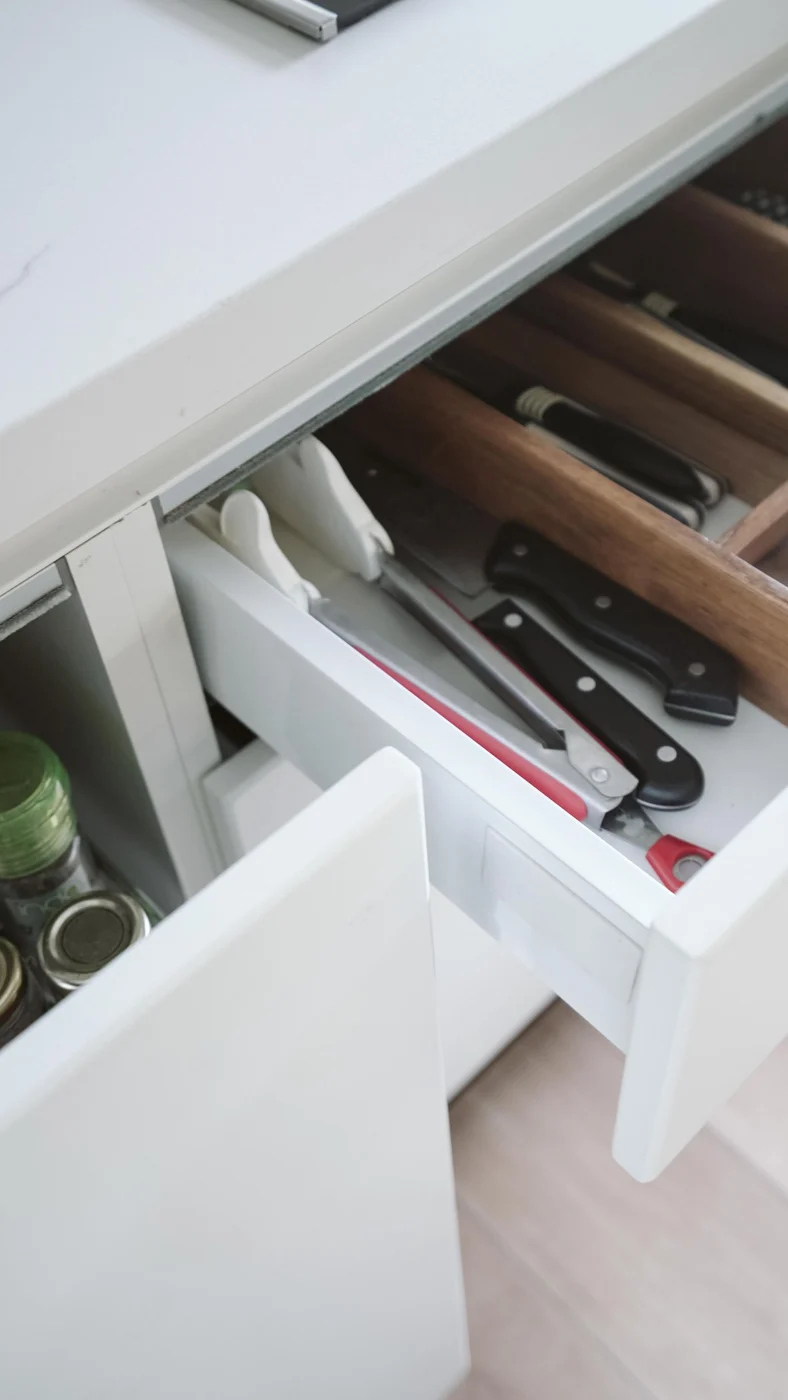
Remove loose objects from the movement area. A projecting folder, displaced organiser or cable may be responsible. With drawers, check whether contents catch above or extend over the sides. Do not remove stops or restraints merely to gain space. They have a designed function within the particular runner system.
Consider loading and location
Has the furniture recently moved or been loaded differently? Check its standing position against the appropriate instructions. A changed floor or unevenly loaded cabinet can affect operation. Do not try to straighten a tall cupboard by pulling its door. Required wall attachments and other restraints remain in place; altering them belongs within an appropriate, competent procedure.
Empty the relevant areas as far as sensible and safe for inspection. A heavy full drawer handles differently from an empty one. If removal is permitted, follow the instructions and set the component down securely. Some runners have release mechanisms; others cannot be detached in the same way. Appearance alone is not a dependable operating guide.
Two observations, different next steps
A drawer closes smoothly when empty but stops near the end when filled. Start with its contents: a tall folder or an insert that has slipped backwards may be meeting part of the cabinet. Return items gradually and observe when the problem reappears. This narrows the cause more usefully than immediately adjusting the fittings. Keep within the furniture’s stated loading limits throughout.
If two doors began rubbing only after a move, the new installation is a sensible starting point. Use the assembly instructions to check that the cabinet is fully and correctly installed before changing previously satisfactory door settings. Do not confuse fixing screws with adjustment screws: their functions should be identified in the instructions. Note or photograph the starting position, then make only one identifiable adjustment at a time. You can then tell whether it actually helps or simply moves an uneven gap elsewhere. A record also prevents repeated turns in different directions from making the original position impossible to reconstruct.
Identify the fittings
Find the model, assembly sheet and any fitting identification. Many hinges offer several adjustment directions. Turning an arbitrary screw can therefore produce the wrong movement or loosen a fixing. Photograph or mark the starting position when the instructions explicitly permit adjustment.
Work in small, traceable steps and check the result between them. Use a correctly fitting tool to avoid damaging screw heads. Stop when the intended range is reached or a connection feels unusually loose. Tightening harder does not automatically restore a pulled-out fixing.
Clean without changing the mechanism
Remove visible loose dirt from accessible areas according to the care guidance. Do not add oil or grease to runners and dampers without checking. Some systems need no additional lubrication; others require a particular product. Residues may also hold dust or transfer to stored belongings.
Document a failed damper, damaged wheel or bent metal part. A replacement enquiry with photographs, model and component location is more precise than buying an approximately similar fitting. Check left and right versions, dimensions and product generation when ordering.
Check the full result
After each change, inspect the entire intended movement without overloading the furniture. Are gaps and stops appropriate again, do contents remain clear, and are all required restraints present? Do not continue normal use of a damaged or insecure door. Uncertain supporting connections or an unstable cabinet warrant competent help. Keep successful adjustments and replacement part numbers with the furniture records. If another fault appears later, this history helps distinguish a repeated problem from something newly introduced by moving or loading the piece.