Two surfaces have different needs
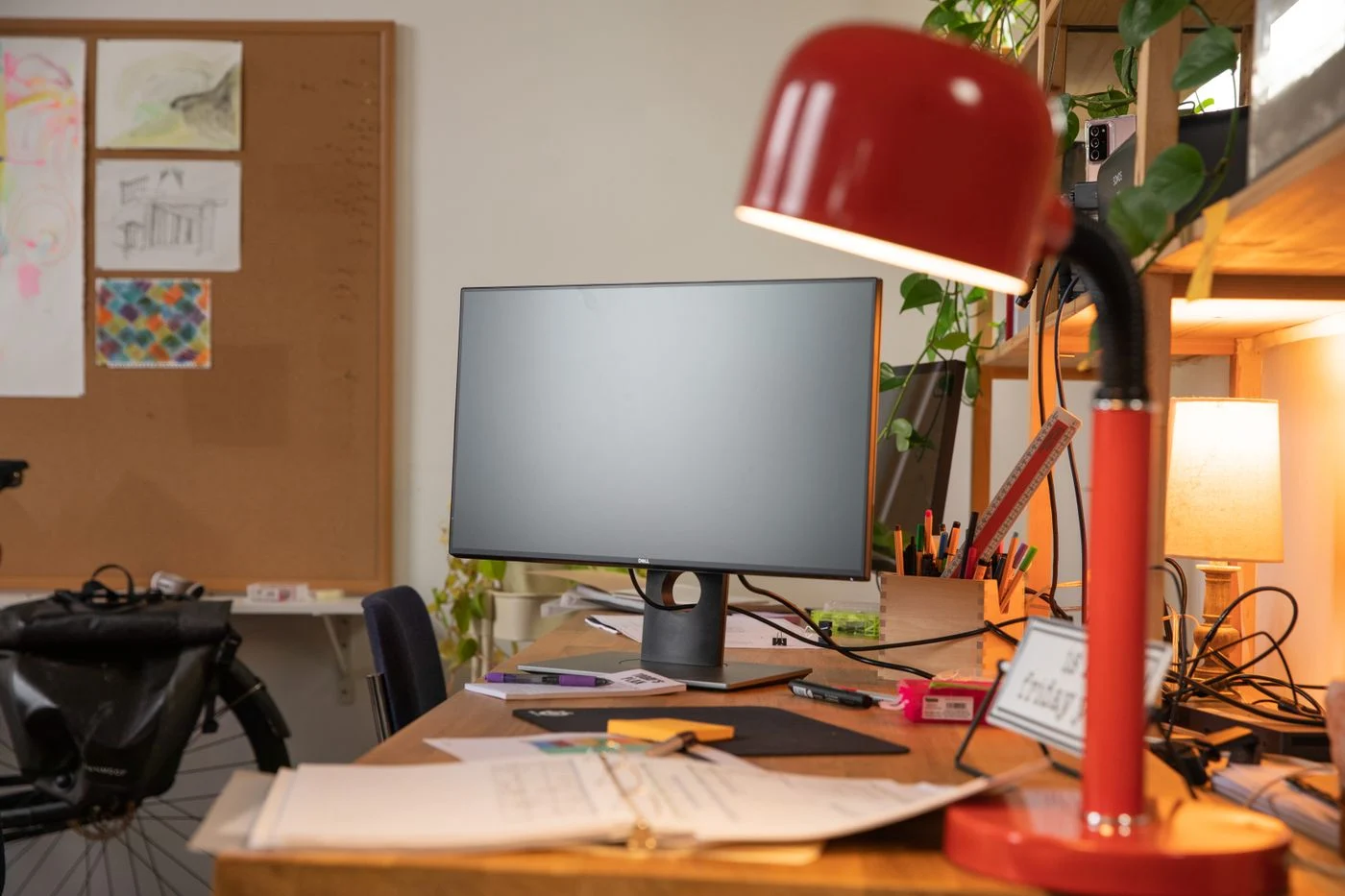
A desk lamp usually illuminates paper, a keyboard or another working surface. The screen produces its own image. Directing the beam onto the display can make that image harder to see rather than improving it. Identify the object needing additional light first, then aim the lamp at that task.
Display dark content briefly and check from the normal seated position whether the lamp appears as a reflection. Repeat with the application used most often. Some reflections become noticeable only with particular content. Move the lamp head or the whole fitting sideways and compare the effect before increasing its output.
Allow for the shadow of the hand
While writing, the hand can shade the text. Try the lamp on the other side and write several lines. The useful position depends on hand posture, paper placement and shade shape. A general instruction about one side is insufficient where a monitor base or other equipment limits the available position.
An adjustable arm helps with changes between reading and writing, but it needs movement space. Check whether it strikes a shelf or projects above the display into the field of view. A clamp lamp requires a suitable desk edge. A thin or hollow desktop is not automatically approved for every type of clamp.
Include the rest of the room
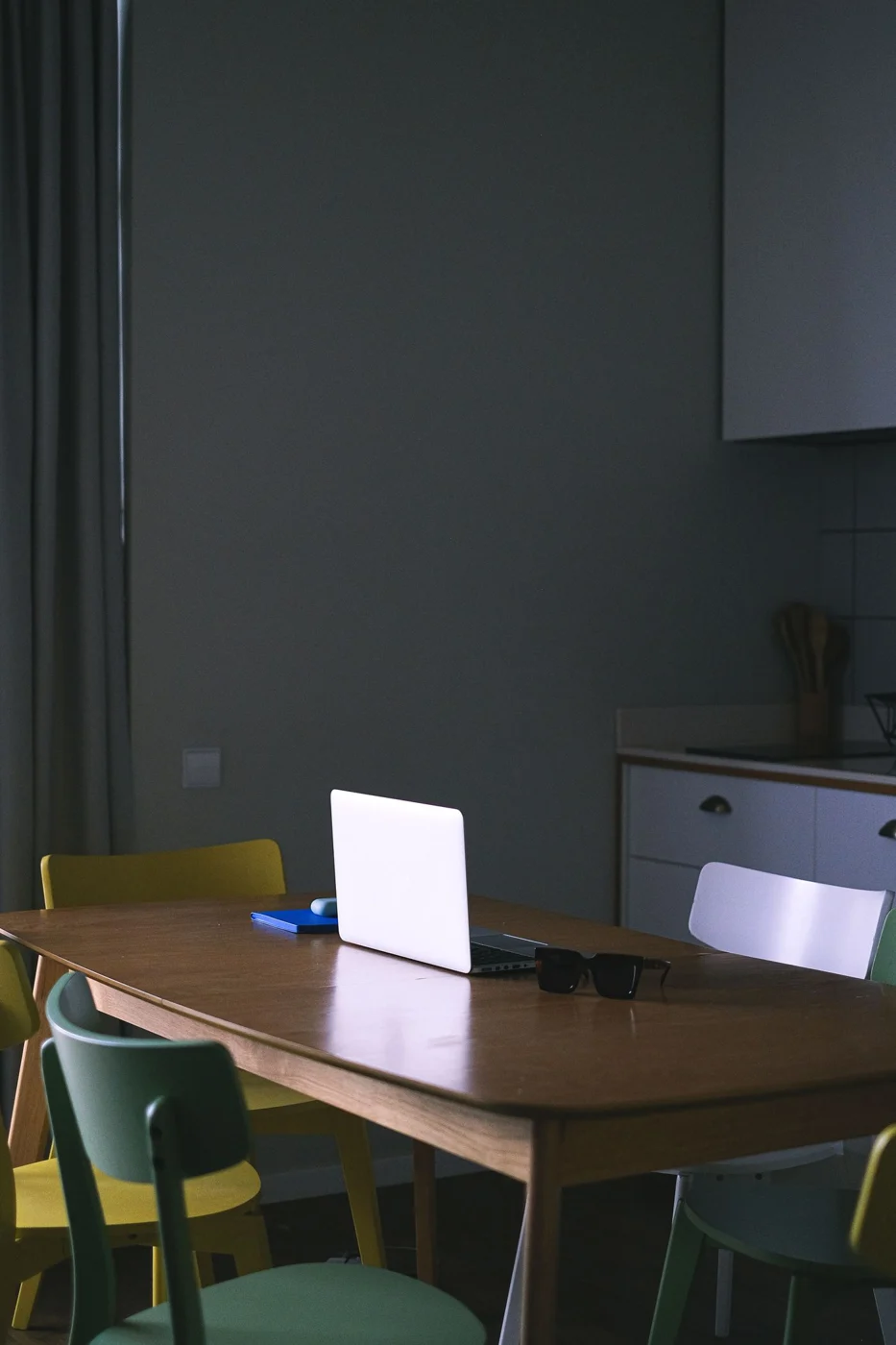
Avoid leaving the area around the desk completely dark. Appropriate room lighting and the local task lamp perform different jobs. Test them together instead of making the desk lamp progressively brighter. A glossy tabletop may return the beam as a conspicuous bright patch, even when the screen reflection has been removed.
Inspect the arrangement from the opposite seat if the table is shared. The lamp should be comfortable for more than just the person working beneath it. Route the cable so the tested position remains usable and keep the switch accessible. If the lamp needs elaborate adjustment before every session, a marked starting position or a more suitable location may help. The useful setting is one that survives the normal routine rather than only the initial test.