Use the exact model
The quoted sleeping surface is not the same as the full open footprint. Arms, the back and the mechanism may extend beyond it. Look for a drawing of the specific model in both positions. If overall open dimensions are missing, ask before ordering. A similar version from the same range may work differently.
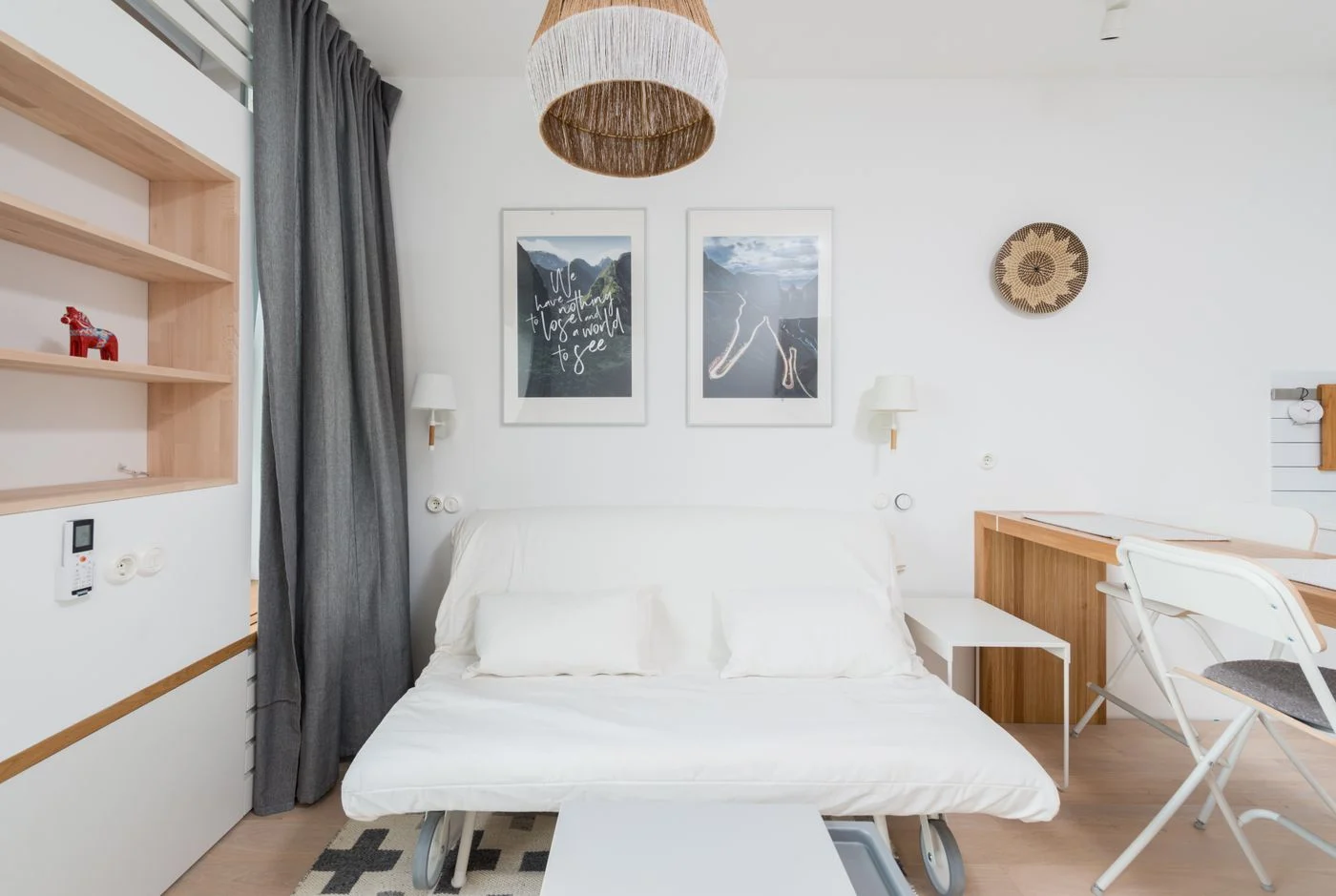
Notice which way it converts. Some sofas open forwards, while others require clearance behind the backrest. A corner design may also pull out sideways. Draw not only the final position but the space swept by moving parts as the mechanism opens. A table outside the final bed outline can still obstruct that movement.
Rehearse the room with paper
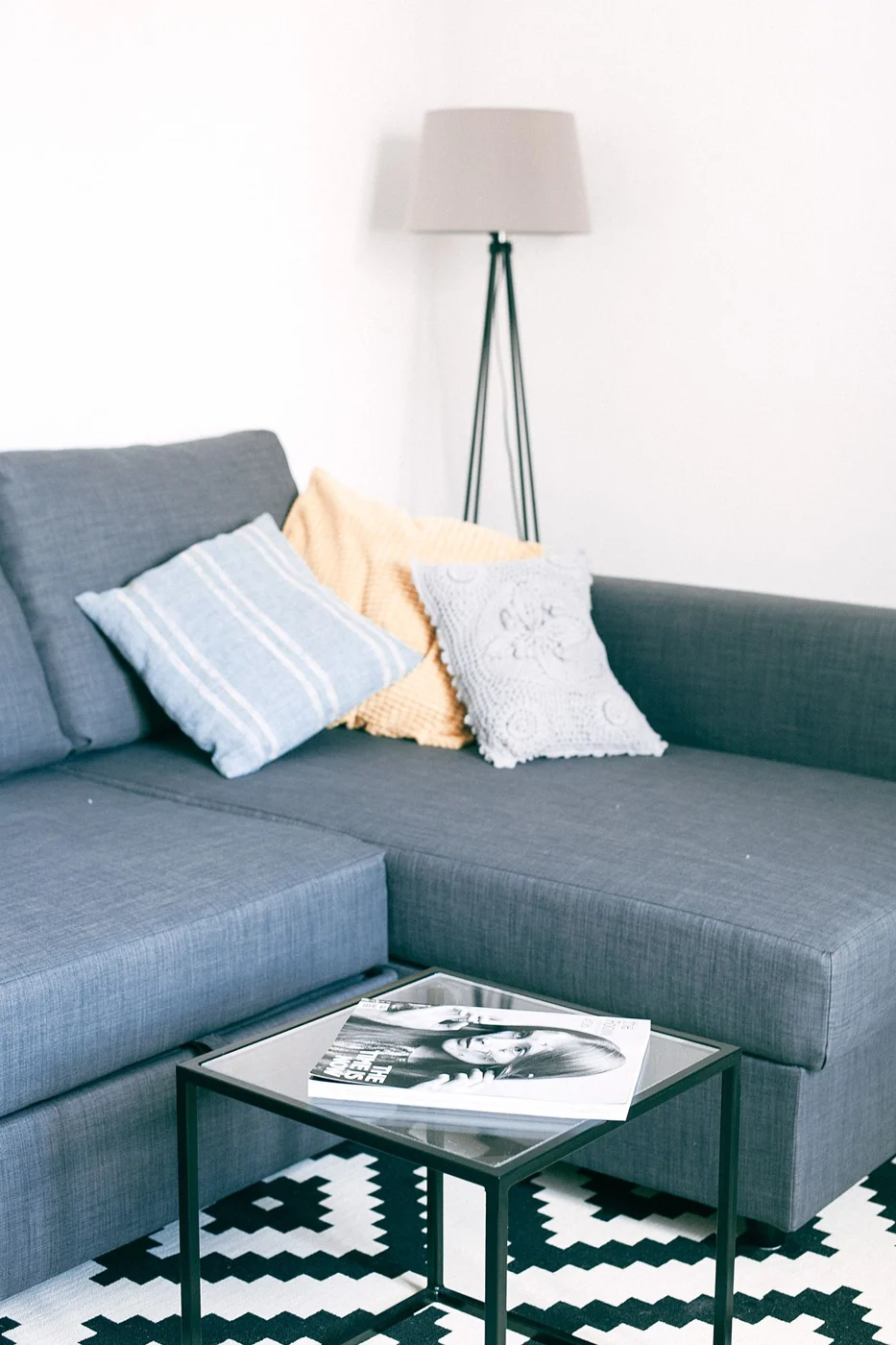
Mark the closed outline and fully opened shape with different strips of paper. Include the coffee table, lamp bases and any armchair. This shows which things must move in the evening. Each displaced object needs a planned location that does not block a door.
Stand beside the proposed sleeping surface too. You need to fit bedding and reach the corners of the sheet. Access to the door and window should remain possible at night. If a cupboard cannot open fully in this arrangement, decide whether it contains something a guest will need during the night or the following morning.
Try the actual conversion
Where possible, operate the mechanism yourself. A quick pull on one handle does not reveal the work involved in the full sequence. Account for loose cushions, unfold every part and close it again. Follow the instructions, particularly if more than one person is required for the operation.
The height of the sleeping surface and the joins between upholstered sections also affect its use. A sofa that feels pleasant as a seat is not automatically the sleeping arrangement you would choose. If overnight visits will be frequent, give the bed function as much attention as the seating. Ask which bedding, if any, can remain inside when it is folded.
Provide places for bedding and belongings
An integrated storage compartment is useful only if the intended duvet and pillows fit and the compartment can be reached in this room. Otherwise, provide a separate storage location. Include a small surface for a phone, glasses and water, together with somewhere for the guest's bag.
Finally, check delivery access. The assembled size in the living room says nothing about the largest package on the staircase. Ask about packaging dimensions, removable components and delivery conditions. A sofa bed fits only when it can arrive, open correctly and leave a usable room in its overnight arrangement.
When the sofa is an everyday bed
For daily use, repetition matters more than occasional maximum occupancy. Time your own complete changeover, including bedding, cushions and coffee table. That is not a universal quality measure, but reveals the actions repeated every evening. A mechanism that works alone may still be inconvenient if bedding lives in another room.
Check how the sleeping surface can be aired and cared for after getting up. Immediate tight folding is not the appropriate procedure for every setup. Follow the particular product's guidance. The daily arrangement may therefore need an intermediate state before the sofa is fully ready for sitting again.
For occasional guests, a more involved change may be acceptable where it is rare and suitable help is available. For an everyday sleeping place, the question is whether the sequence remains manageable on a tired evening. These uses should not carry identical priorities. Ask specifically about the model's intended frequency of use instead of assuming that the term sofa bed establishes daily suitability.
When comparing two candidates, record differences beyond mattress area: storage, operation, moving-part weight, access and the home for loose cushions. This converts an abstract specification into a comparison of actual evenings and mornings in the room.