Measure the table as it is used
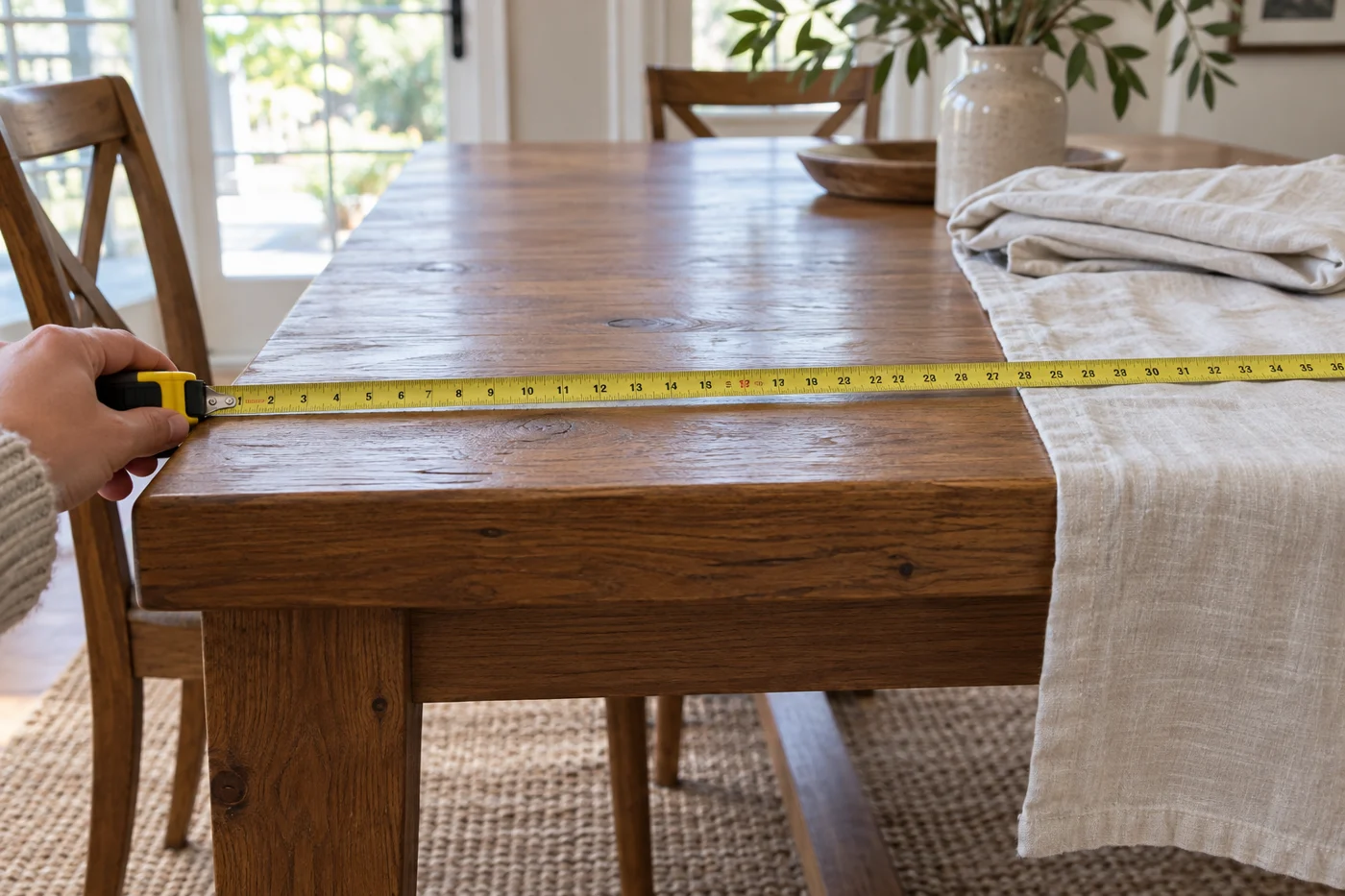
Measure the table in the state in which the cloth will normally be used. An extending table may require two separate sets of measurements. Record length and width, or the diameter of a round top. Use the actual outer edge of the surface rather than the distance between the legs.
Next decide how far the fabric should fall on each side. For a rectangular cloth, add twice the intended drop to the length and twice to the width. For a round table, add twice the drop to the diameter. This is a way to calculate your chosen result, not a rule prescribing a particular drop. Short and generous overhangs behave differently when people sit down.
A table with extension leaves
For a table extended only on certain occasions, two suitable cloths may be easier than one oversized everyday option. Trial the larger cloth on the short table and inspect its drop before committing to a single solution. Excess fabric may rest on chairs or be pulled when someone stands.
A runner can relate to both table lengths, but does not cover the sides like a full cloth. Decide according to the required protection and use. In the extended condition, inspect seams and pattern direction too: the table's centre may move compared with its everyday arrangement.
Trial it with an existing cloth
Spread a large cloth over the table and temporarily fold or pin the edge to the proposed length. Sit on every side. Check whether the fabric rests on knees, gets pulled when someone stands or catches a chair arm. At a tight dining corner, that movement matters more than an evenly arranged edge in an empty room.
On an oval table, the corners of a rectangular cloth can hang considerably lower. Draw the shape or compare an appropriate cloth in person. A round cloth on a square surface also creates varying drops. That is not automatically wrong, but it should be deliberate and should not obstruct a nearby drawer or door.
Include washing and storage
Read the product's sizing and care information carefully. Does the stated measurement describe the finished cloth, and what dimensional changes may follow the recommended wash? Pulling a cloth smooth will not permanently solve an undersized fit. For fabric bought to sew yourself, include the hem and any specified pretreatment in the calculation.
Be realistic about the folded size as well. A large tablecloth needs more drying and ironing space than a runner. If the table is cleared daily for other activities, a smaller textile area may suit the routine better. Keep the measurements for the ordinary and extended table together so a replacement can be chosen later without repeating all the measurements.