Look at the large shapes
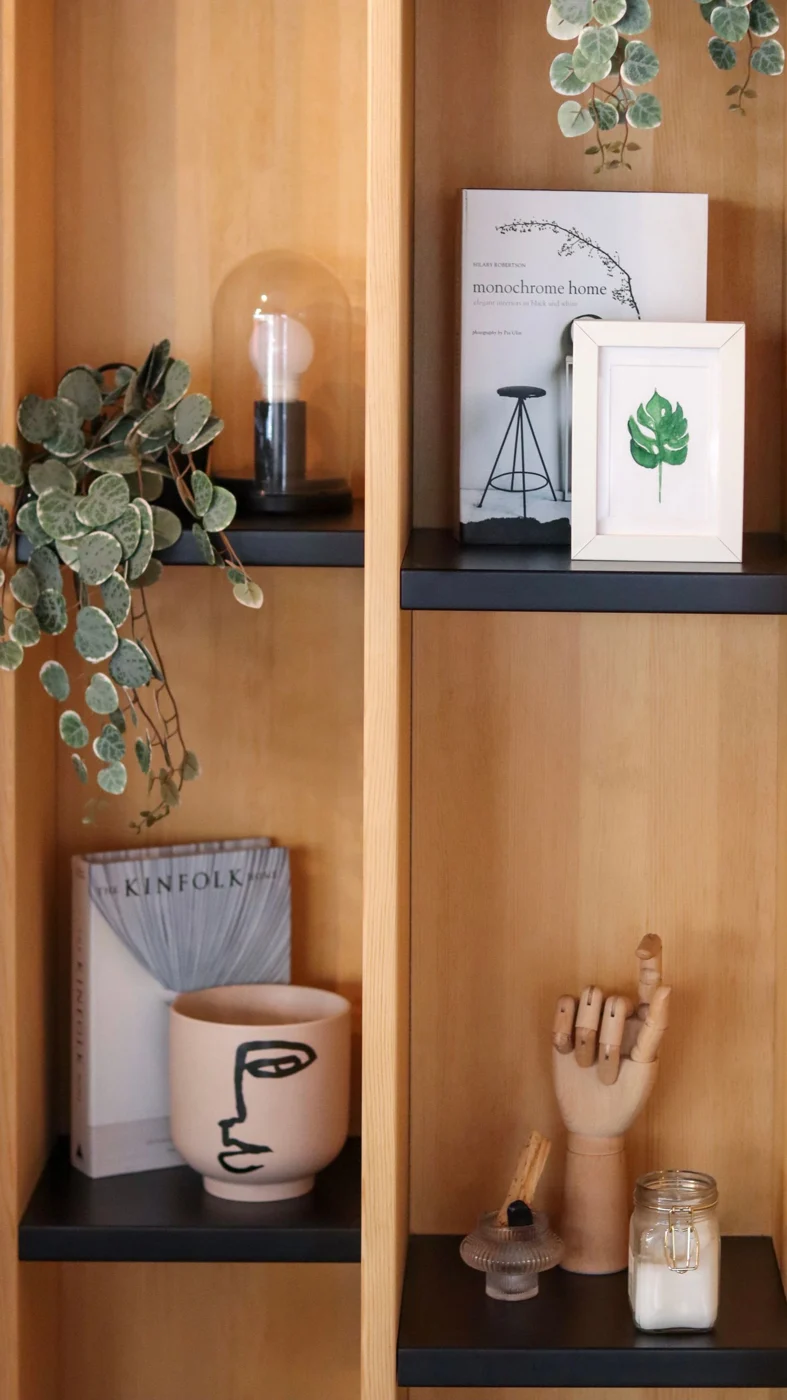
Begin with outlines rather than individual wood colours. A dark cabinet with solid doors creates a different area from an open frame in the same colour. Several large pieces close together may read as one continuous block. Try distributing them differently before considering replacement.
Clear wall sections between pieces make their shapes easier to distinguish. The gaps need not all be equal. A deliberately grouped storage area can look calmer than separate dark boxes on every wall. Compare both options from the usual seated position, not only from the doorway.
Work with the available light
Light walls, flooring or textiles can contrast with darker furniture. That does not mean every other object must be white. A quieter mid-tone may soften transitions. Place fabric and colour samples directly beside the furniture and look at them in daylight and in the evening.
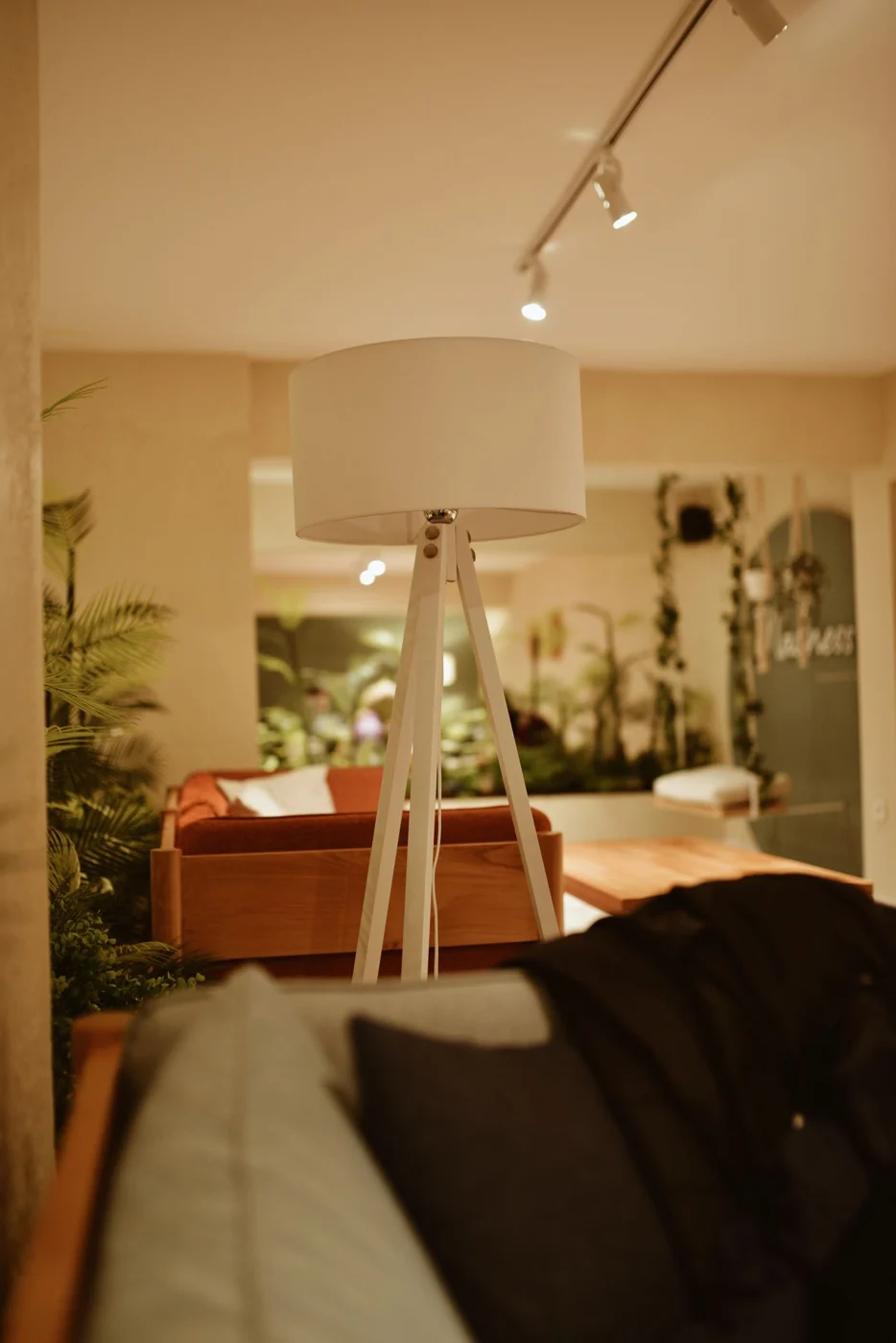
Notice whether tall pieces partly obstruct a window. Moving a cabinet may achieve more than adding pale decoration on top. Several appropriately positioned lamps can make different areas usable without illuminating the whole room equally brightly.
Do not overload the surfaces
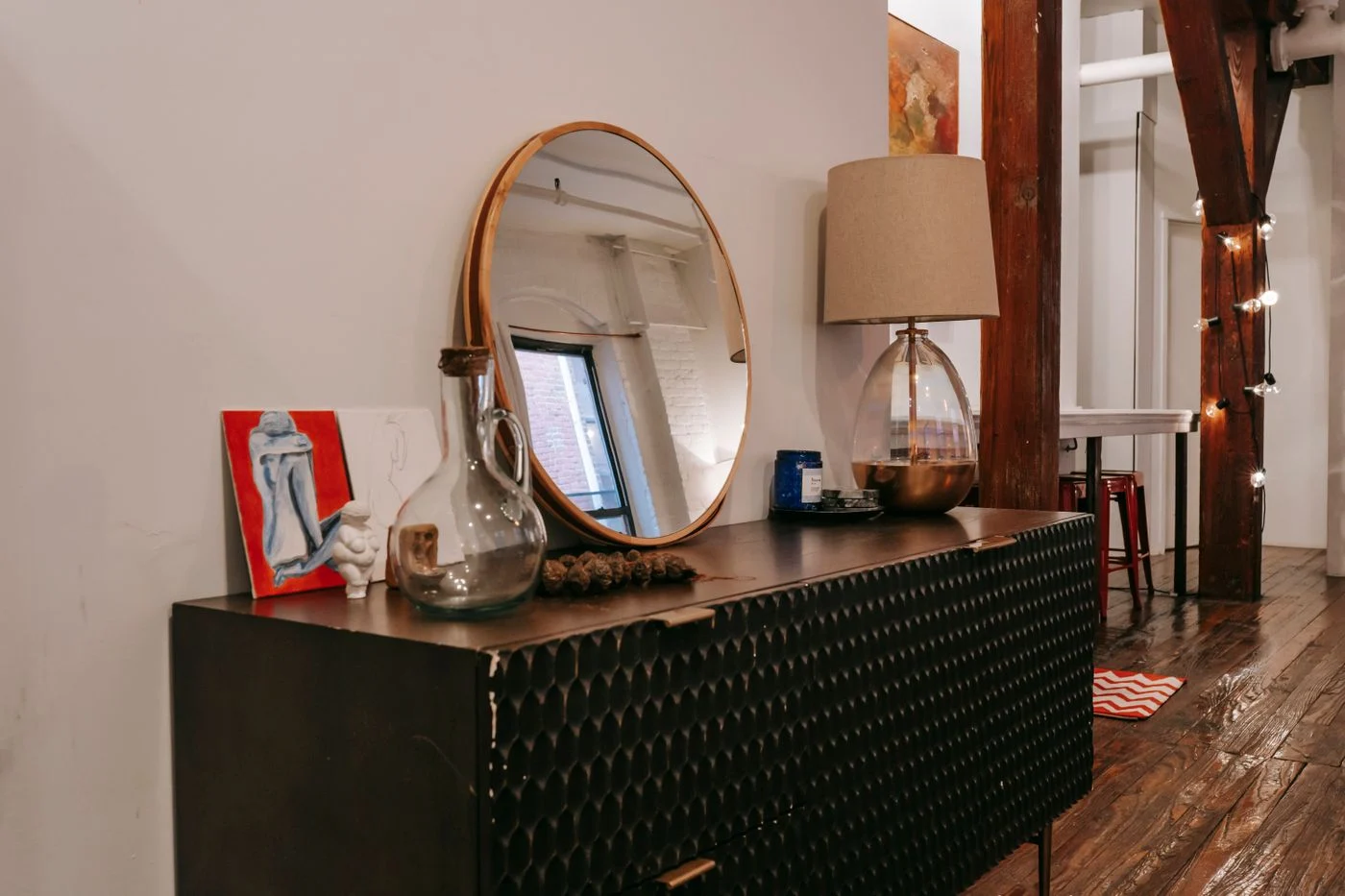
Small pale objects are often conspicuous on a dark chest. A limited group can provide an accent, while many scattered belongings divide the surface into numerous fragments. Leave some of the top clear and consider whether the objects there have a useful role.
A dark sofa does not necessarily need many light cushions to appear less heavy. A suitable throw or one cushion cover may be sufficient. Seating should remain comfortable without requiring decoration to be removed before anyone can sit down.
If a piece still feels dominant, compare its position and height with the rest of the room. Colour is rarely the only cause. A well-proportioned dark piece may work better than several small pale replacements that together occupy more floor space.
Change one surrounding surface first
If a dark cabinet already functions well, first try a quieter background or remove adjacent small furniture. For a brief comparison, cover a busy pattern with an existing plain textile without covering heat sources or equipment. This helps assess the effect of a larger continuous surface. Buy accessories only after that trial. More contrast may help, but can also create numerous competing points of attention. Testing with existing things reveals which direction suits the room and avoids replacing functional furniture simply because the surrounding arrangement has become visually crowded.