Begin with things that are used
Do not immediately reorganise everything by colour. First separate books, frequently used objects and decoration. Everyday items need an accessible position and enough room for a hand. A carefully stacked group can look attractive yet collapse whenever something is removed.
Place larger objects first. Then assess which smaller things genuinely need space. A shelf does not have to contain equal amounts of books, baskets and plants. Its job may mainly be storage, mainly display, or a clearly divided combination of the two.
Leave gaps deliberately
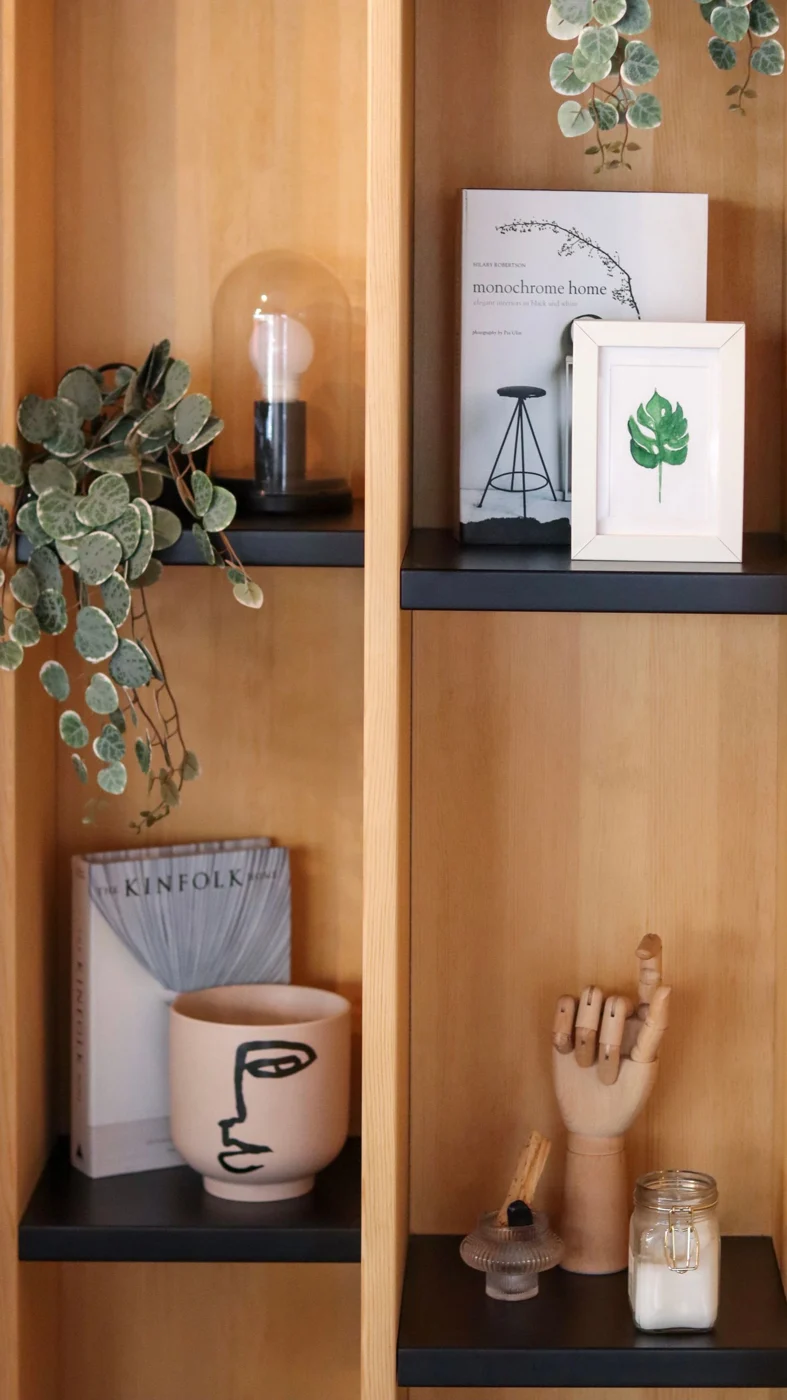
An empty area between two groups may be enough to distinguish them. It does not need to repeat in every compartment. Distribute openness so that the top does not appear crowded while the bottom is entirely empty, subject to the furniture's loading and installation requirements.
Avoid tiny leftover gaps that invite another arbitrary object. They often work better when combined into a more noticeable clear area. Take a photograph and view it at a small size: the main groups should still be apparent even when individual book titles are unreadable.
Use closed containers selectively
A box can bring varied small objects together. Filling every compartment with identical boxes, however, effectively creates a closed front with extra handles. That may be intentional, but changes the role of open shelving. Decide where the contents are meant to remain visible.
Label containers whose contents would otherwise be searched for repeatedly. A decorative box without a defined purpose easily becomes a catch-all. Observe shelf load limits for heavy books and filled containers; a visually balanced arrangement is no reason to exceed them.
Leave space to dust and lift objects out. If the display has to be painstakingly reconstructed after every clean, it may be too intricate for daily life. Open shelving can change with use without having to be completely restyled each time.
One shelf, two roles
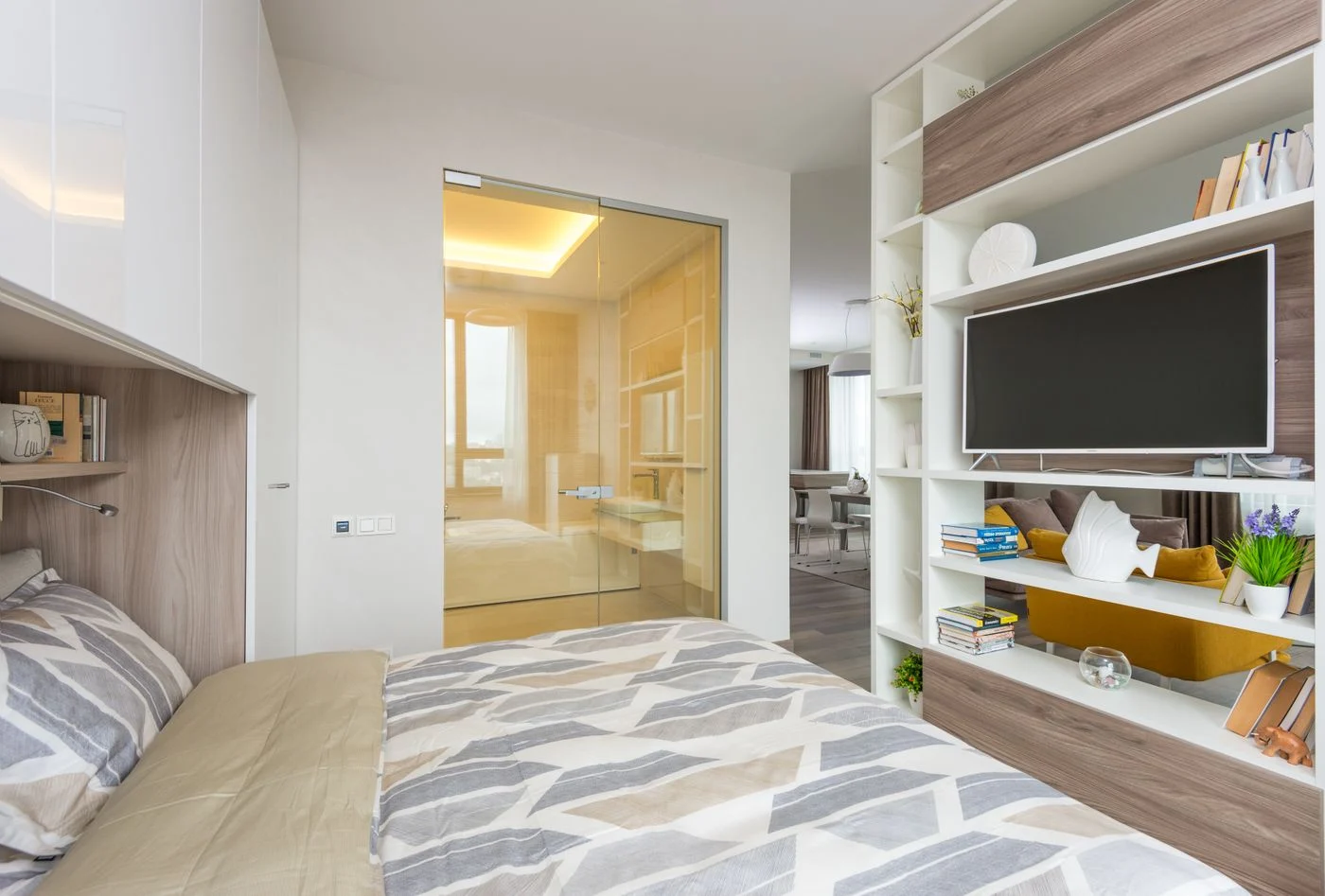
Where shelving holds books and everyday accessories, some compartments can serve retrieval and others display. An open gap beside frequently removed books makes handling easier, without moving decoration every time. Review eye-level compartments in particular: they are often reserved for attractive objects although they are also convenient for important everyday belongings. A deliberate mixture works better than a rigid separation of attractive and useful things. Try keeping one frequently used group at that height and observe whether the whole shelf becomes easier to maintain without losing the visual arrangement you wanted.