Follow the route through the hall
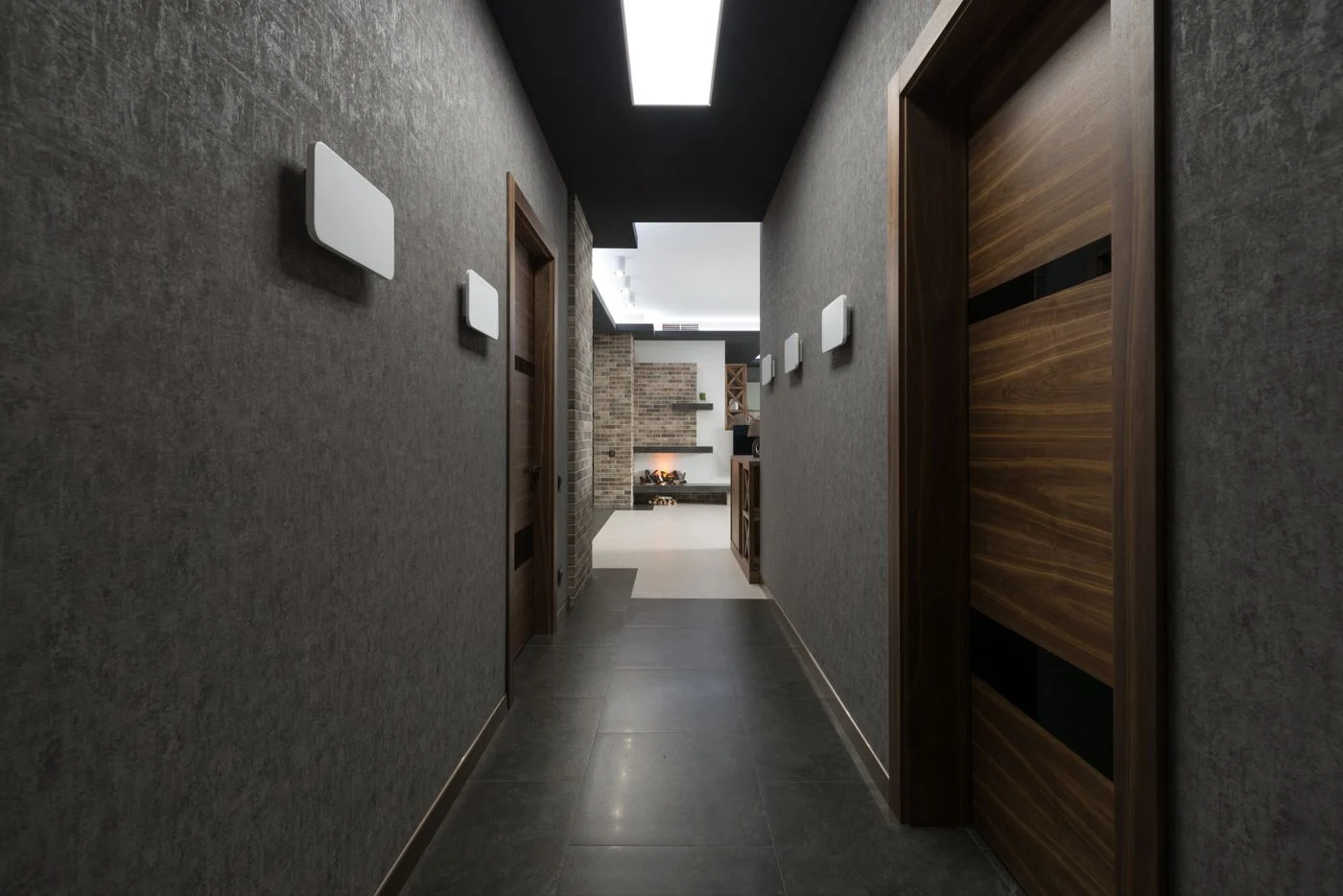
A hallway with little daylight does not need identical brightness everywhere. What matters is seeing furniture, shoes and bags along the route from the entrance to the adjoining rooms. Walk through carrying shopping bags. This reveals whether the switch is accessible and whether an open cupboard door blocks the useful light.
A single fitting above the entrance can leave the far end in shadow. Before buying another light, test the distribution with an existing table lamp on a suitable surface. This is a trial of the lighting effect, not a reason to stretch a cable across the passage. If a crossing lead is the only way to supply that position, it is not a suitable permanent location.
A hallway cupboard with doors
In a hall with an enclosed coat cupboard, test with its doors open. A door may stand directly between the ceiling light and the contents. If the coat you need falls into shadow, the whole hallway does not necessarily need more brightness. Suitable cabinet lighting or another direction of light may help more precisely. Follow the intended mounting and connection requirements.
Also check the floor in front where shoes are changed. A stool and removed footwear alter the clear route. Lighting should reveal that everyday situation, not only the freshly tidied hall. This identifies a functional gap before another decorative lamp illuminates the same already bright wall again.
Consider landing places and faces
Some directed light at the key shelf makes small objects easier to find among the post. At a mirror, however, the face needs to be visible. A lamp behind your head may illuminate the hallway while leaving your face in shadow. Test from the distance at which you normally use the mirror and check whether the source produces an uncomfortable reflection.
One brighter area of wall can make the hall feel more connected than several small, intense points. The result depends on the wall and the furniture. A dark coat cupboard changes the impression compared with an open pale surface. Assess the lighting after the hallway is furnished, not only when the space is empty and all its walls remain exposed.
Open the doors during the trial
Open the entrance door, cupboard doors and doors to adjoining rooms. They should not strike a lamp, and switches should remain reachable with a door open. If motion sensors are used, check that they detect entry from every normal direction. A position that looks decorative may not be a suitable position for a sensor.
For night use, a restrained light with separate control may be more comfortable than the brightness needed for getting dressed. It must still reveal the route being used. Decide which function is missing after this trial. An additional fitting is useful when it has a clear job and does not further obstruct an already narrow space.